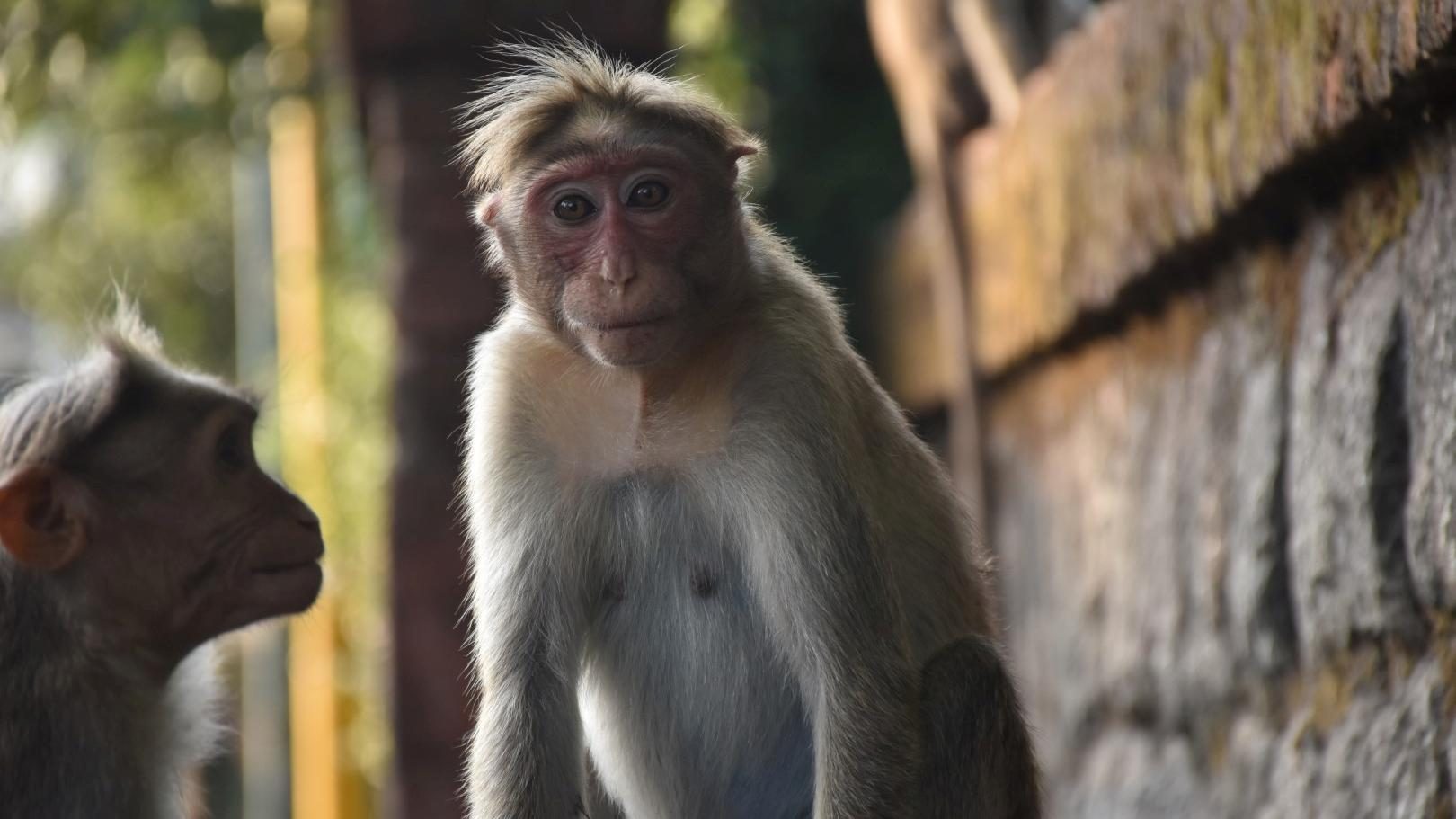
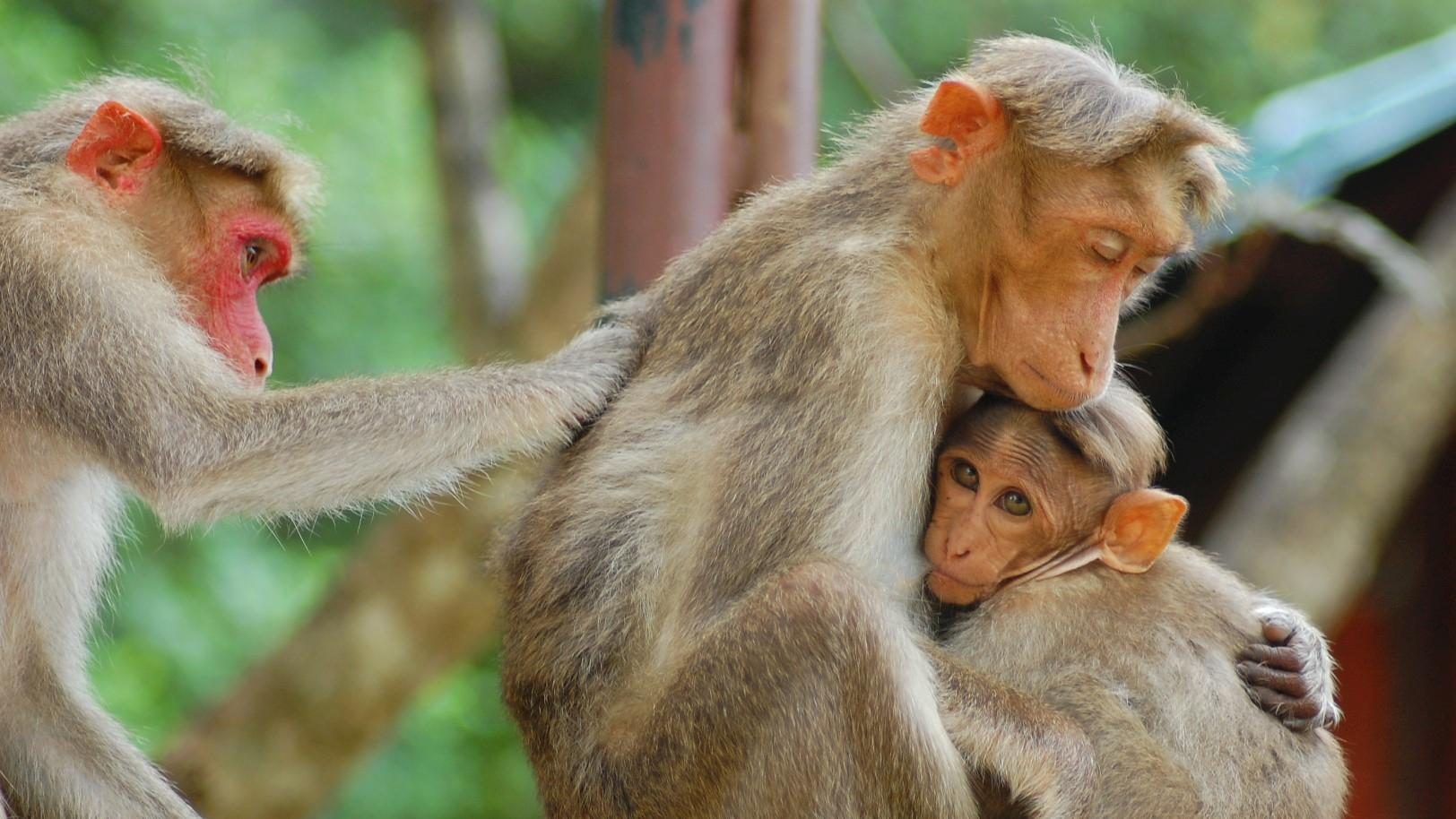
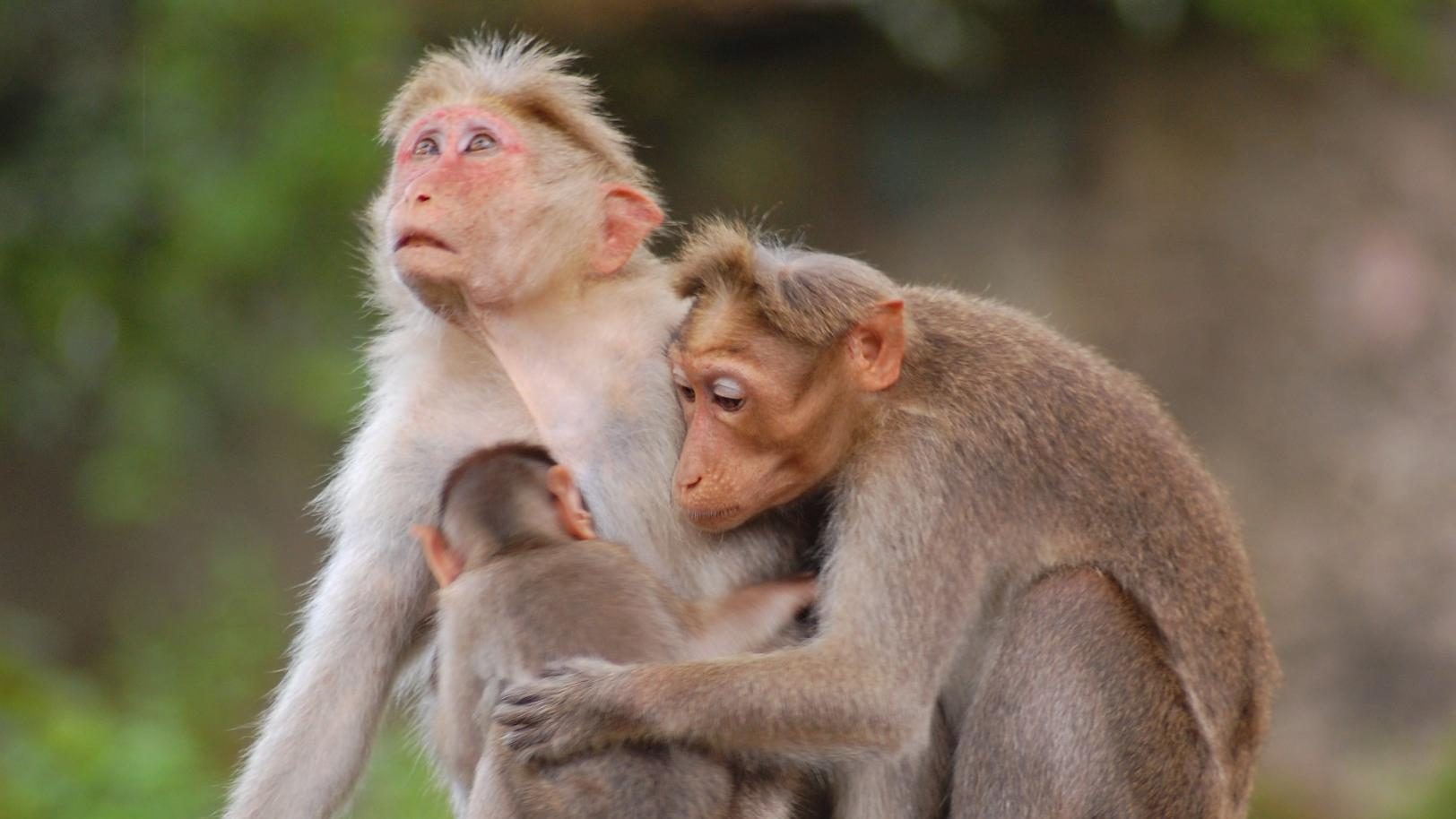
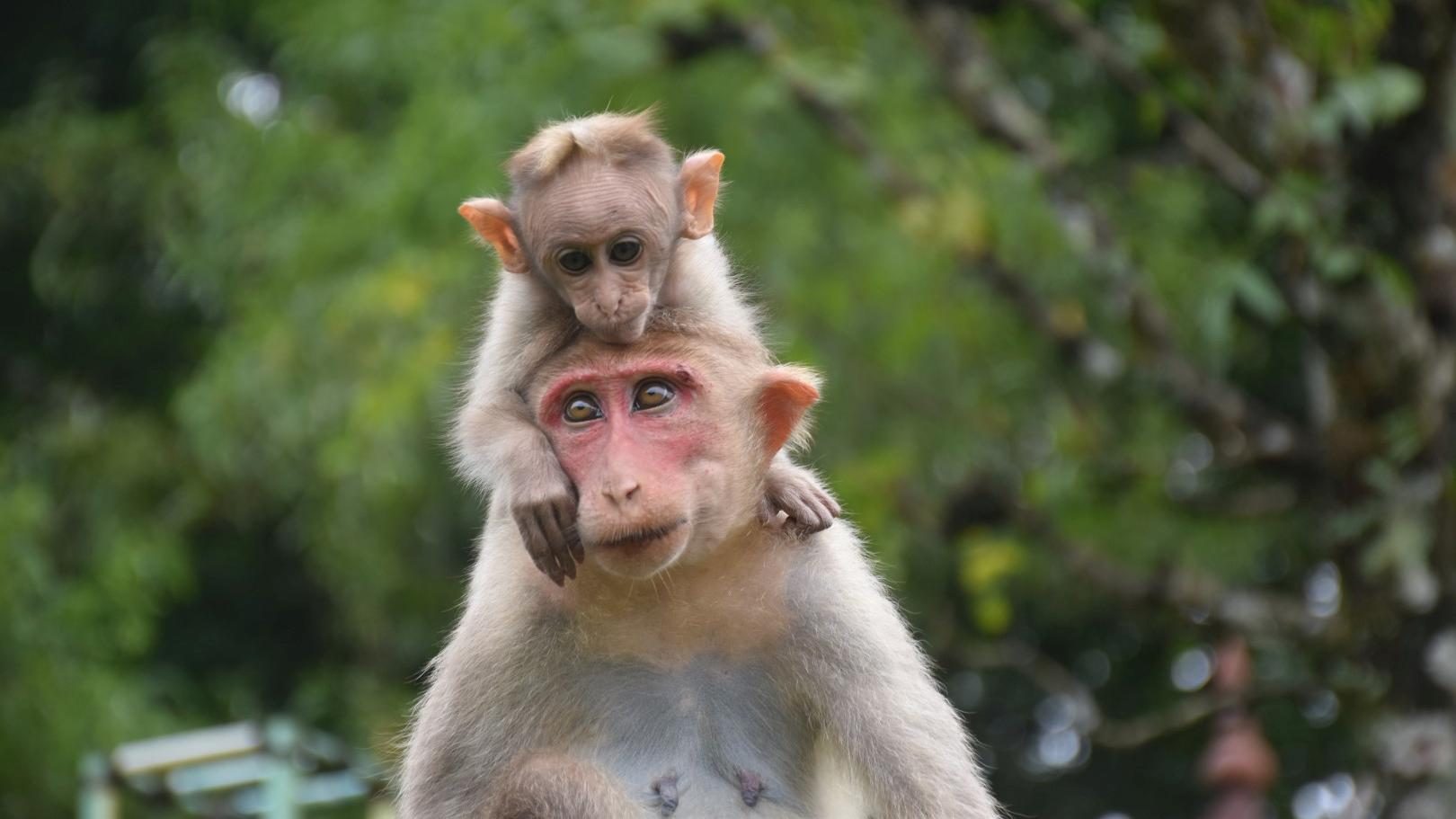
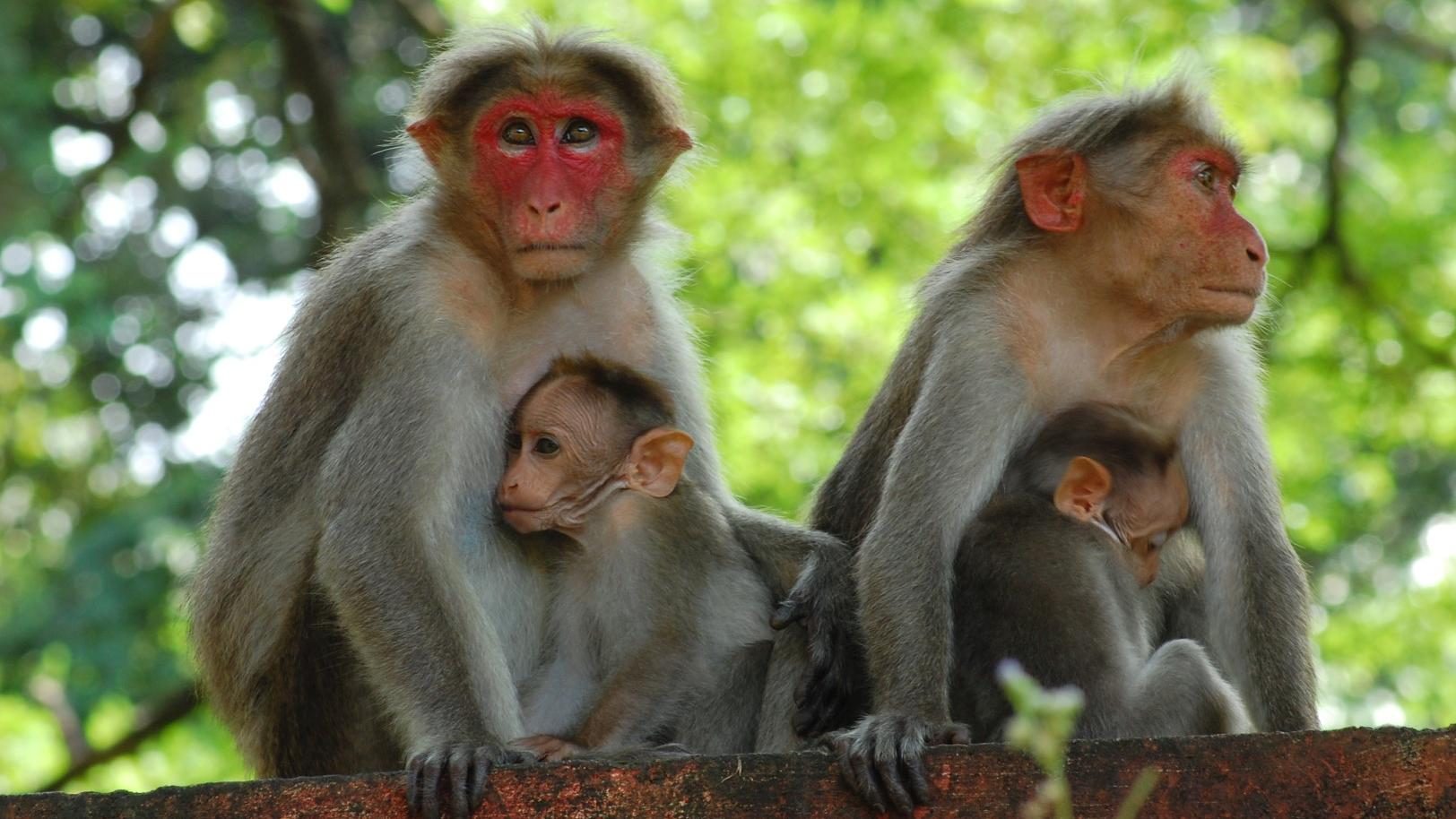
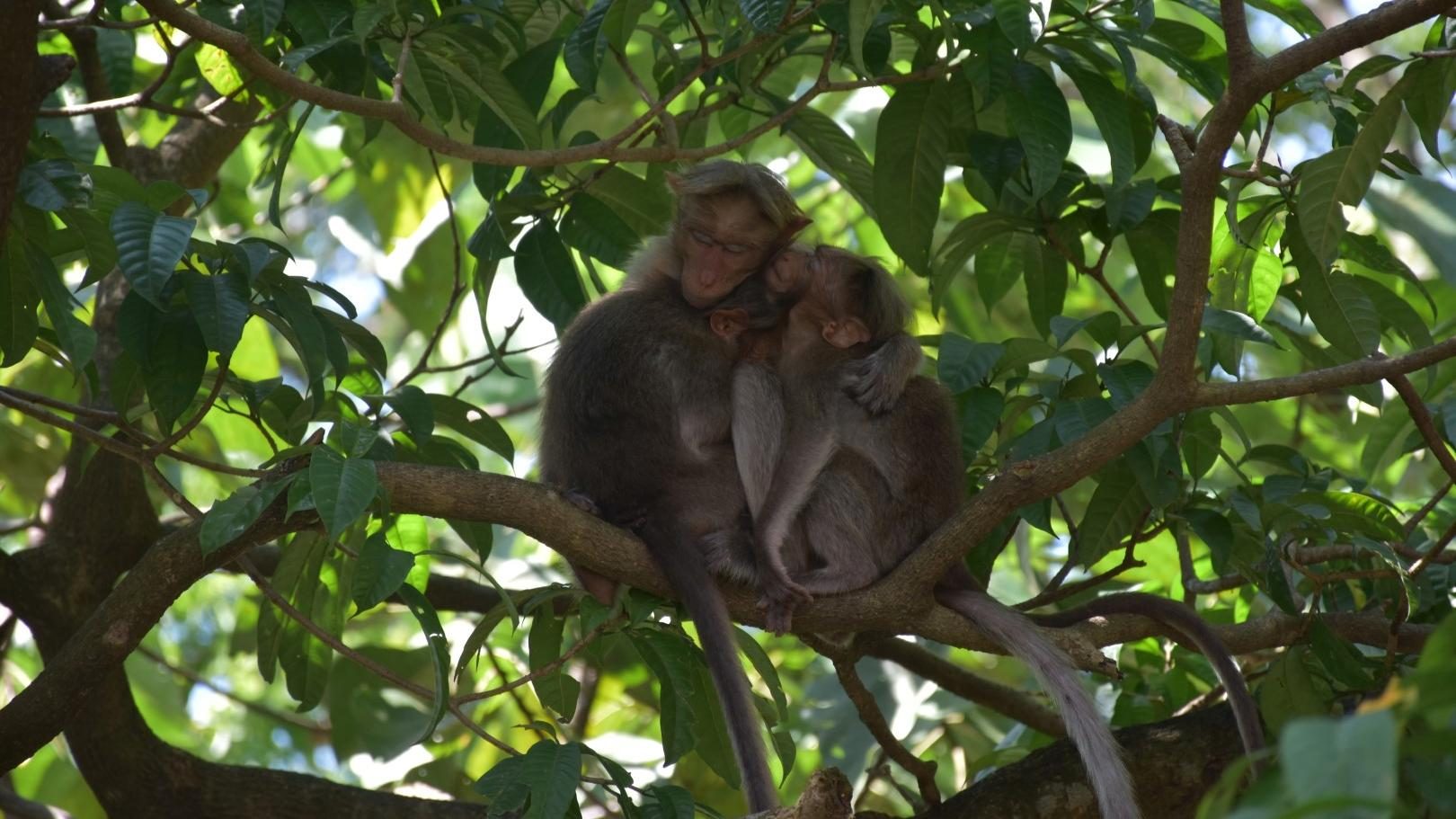
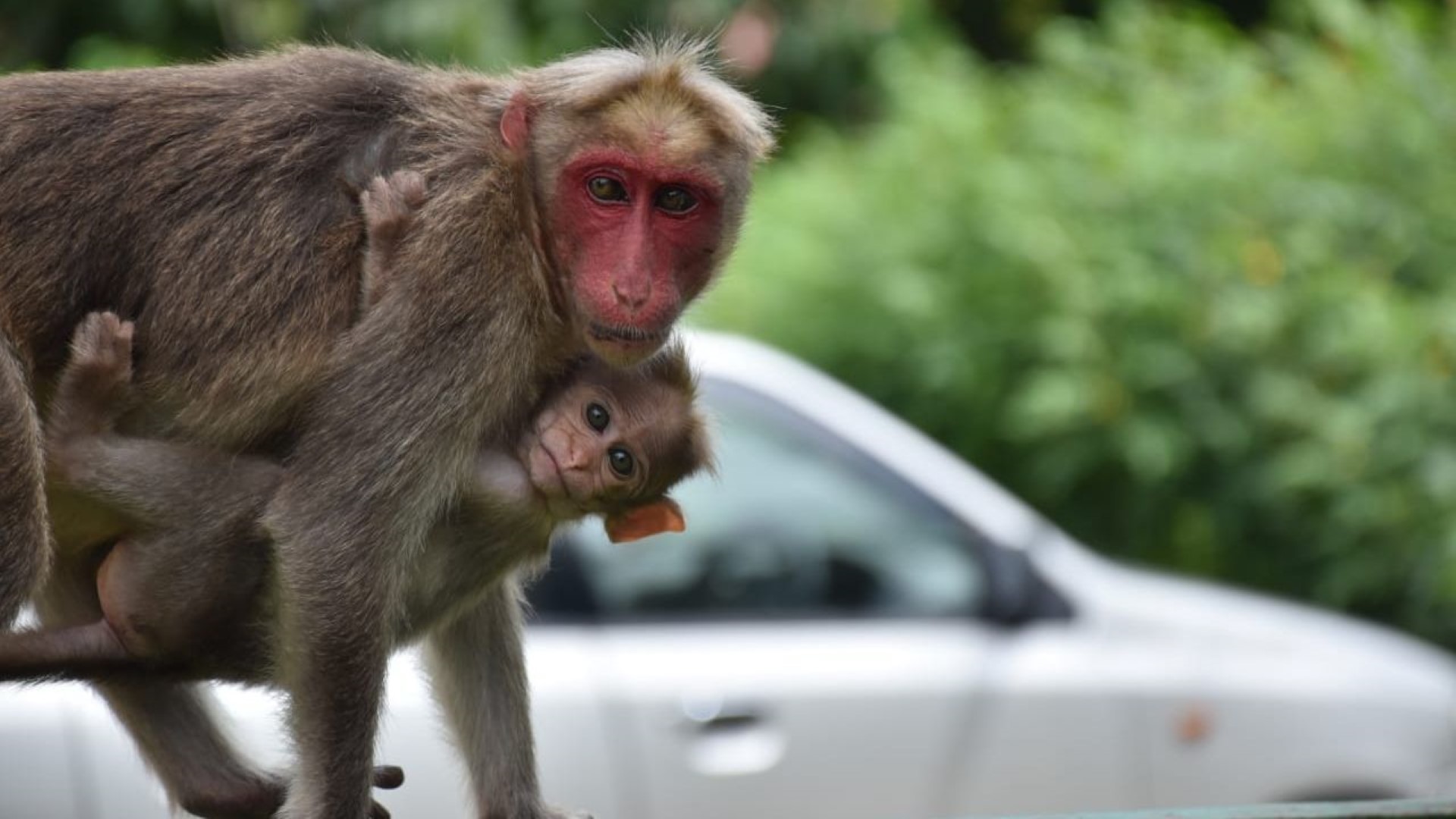
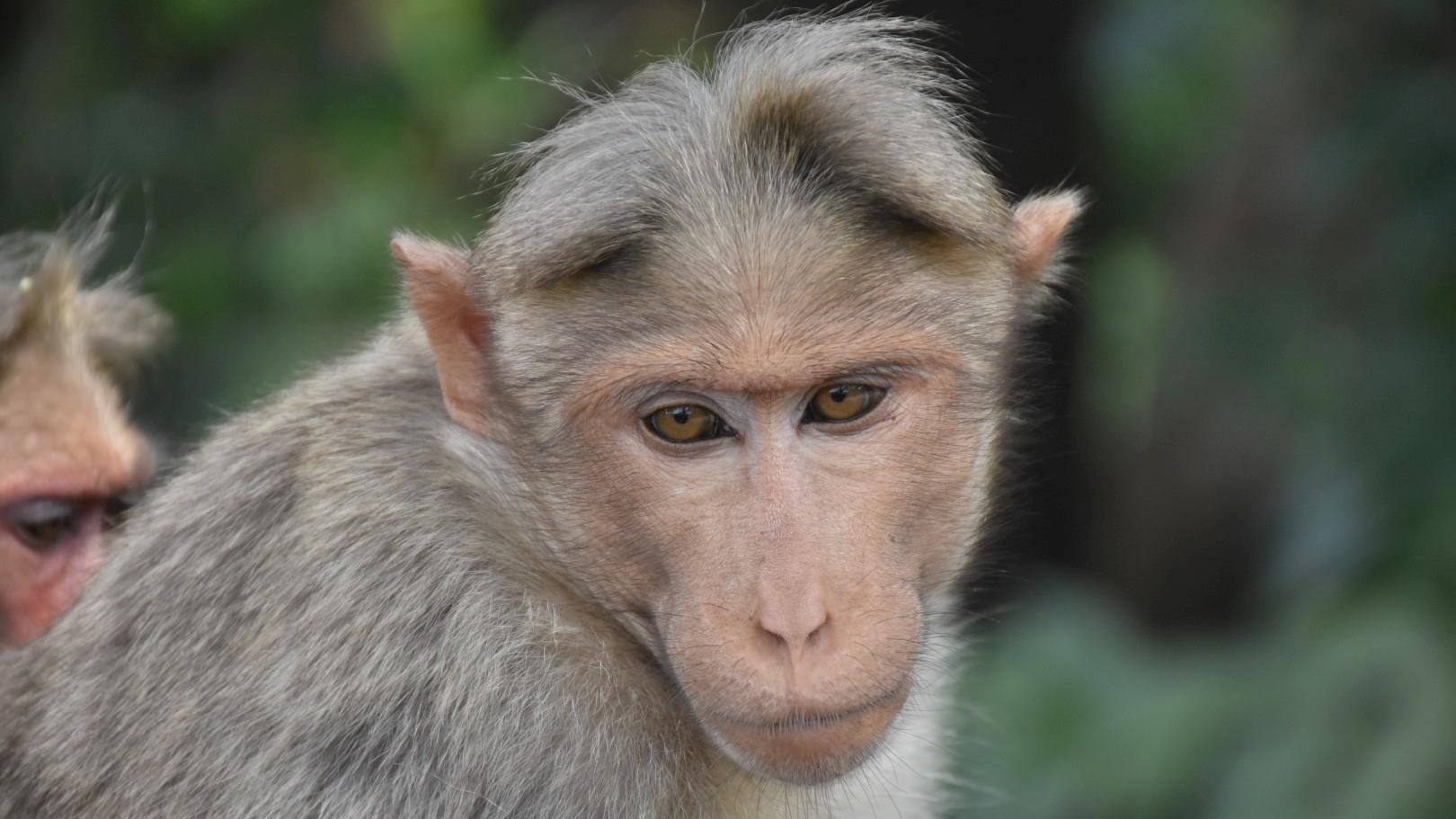
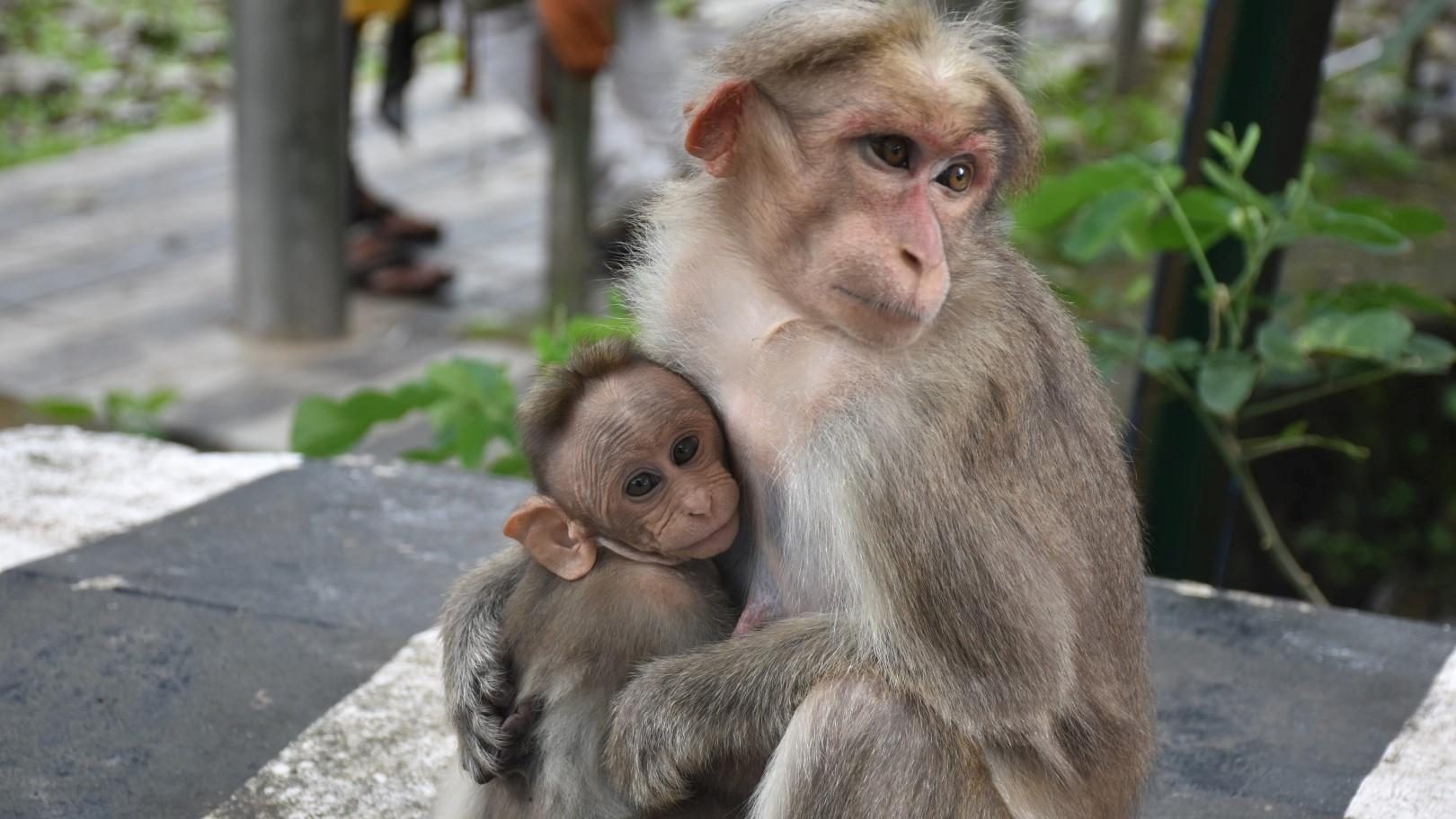
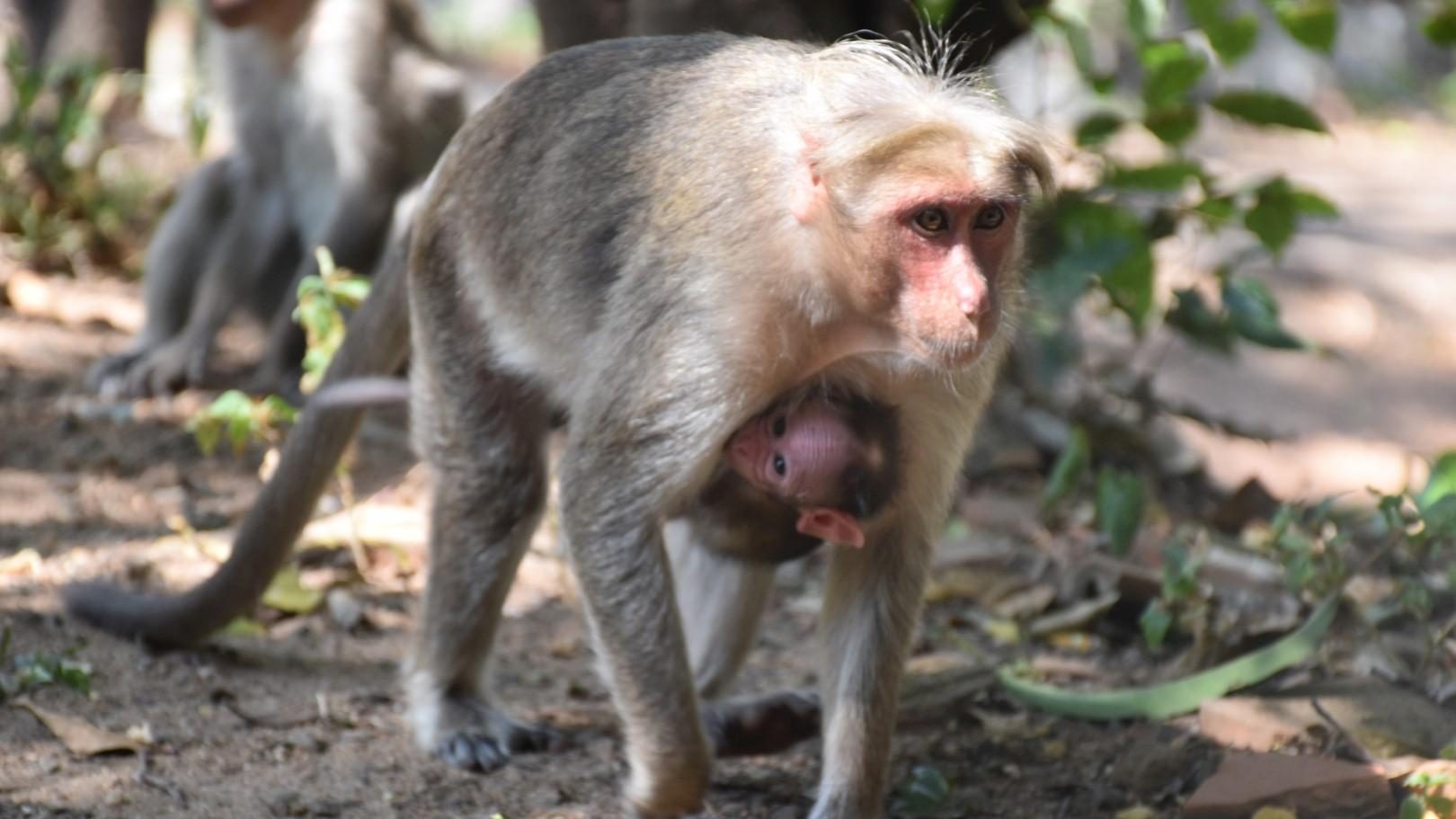
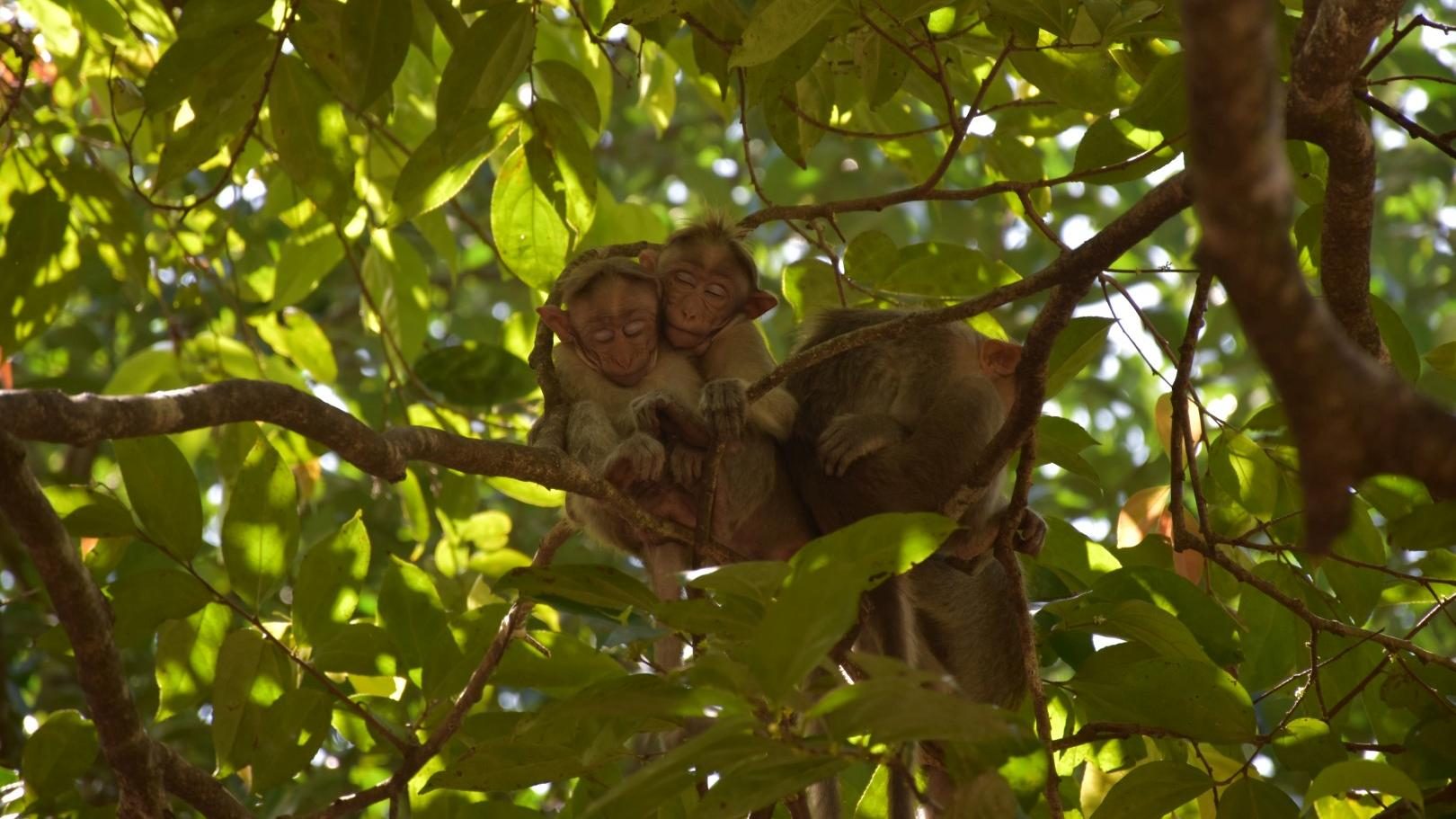
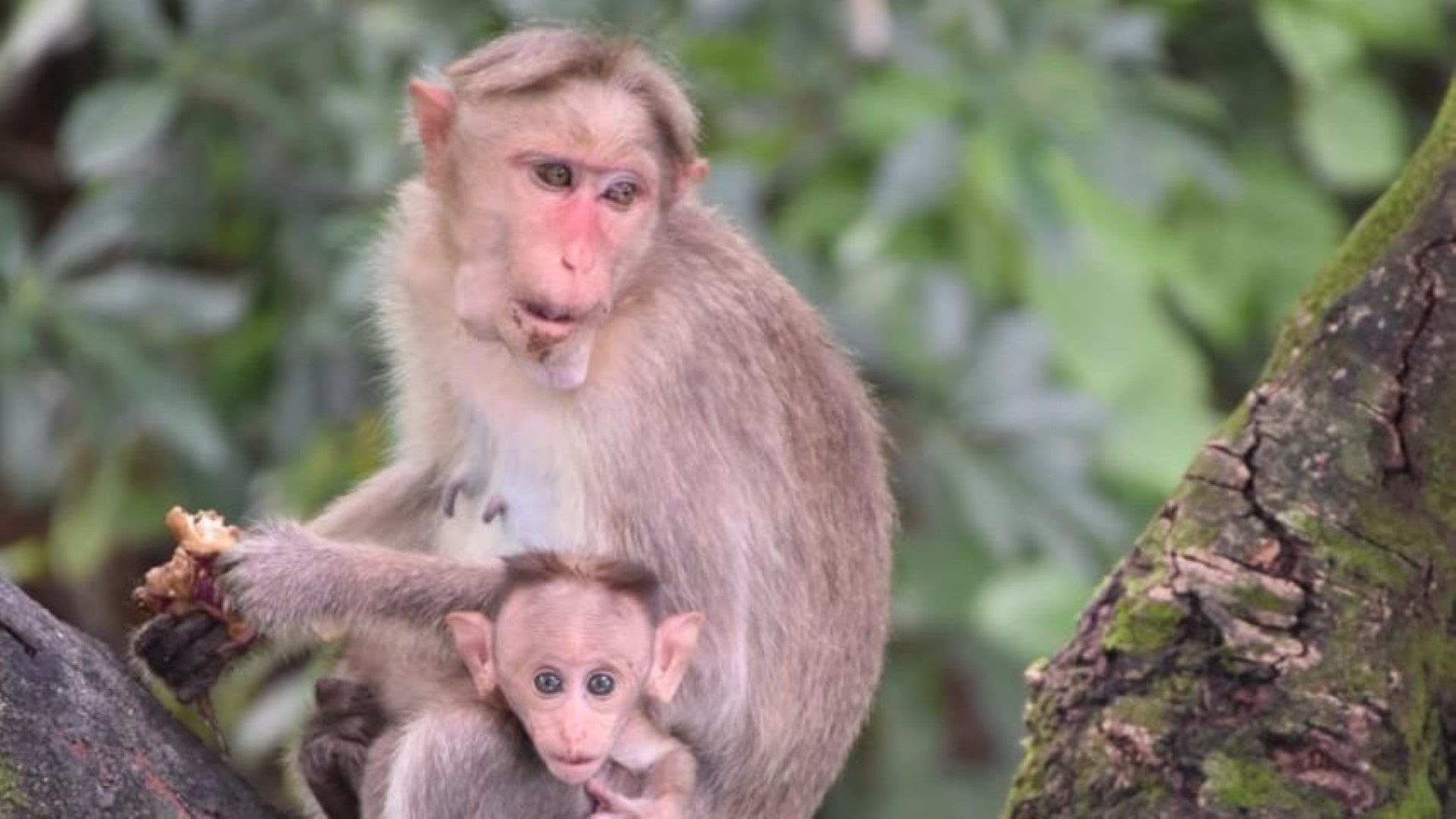
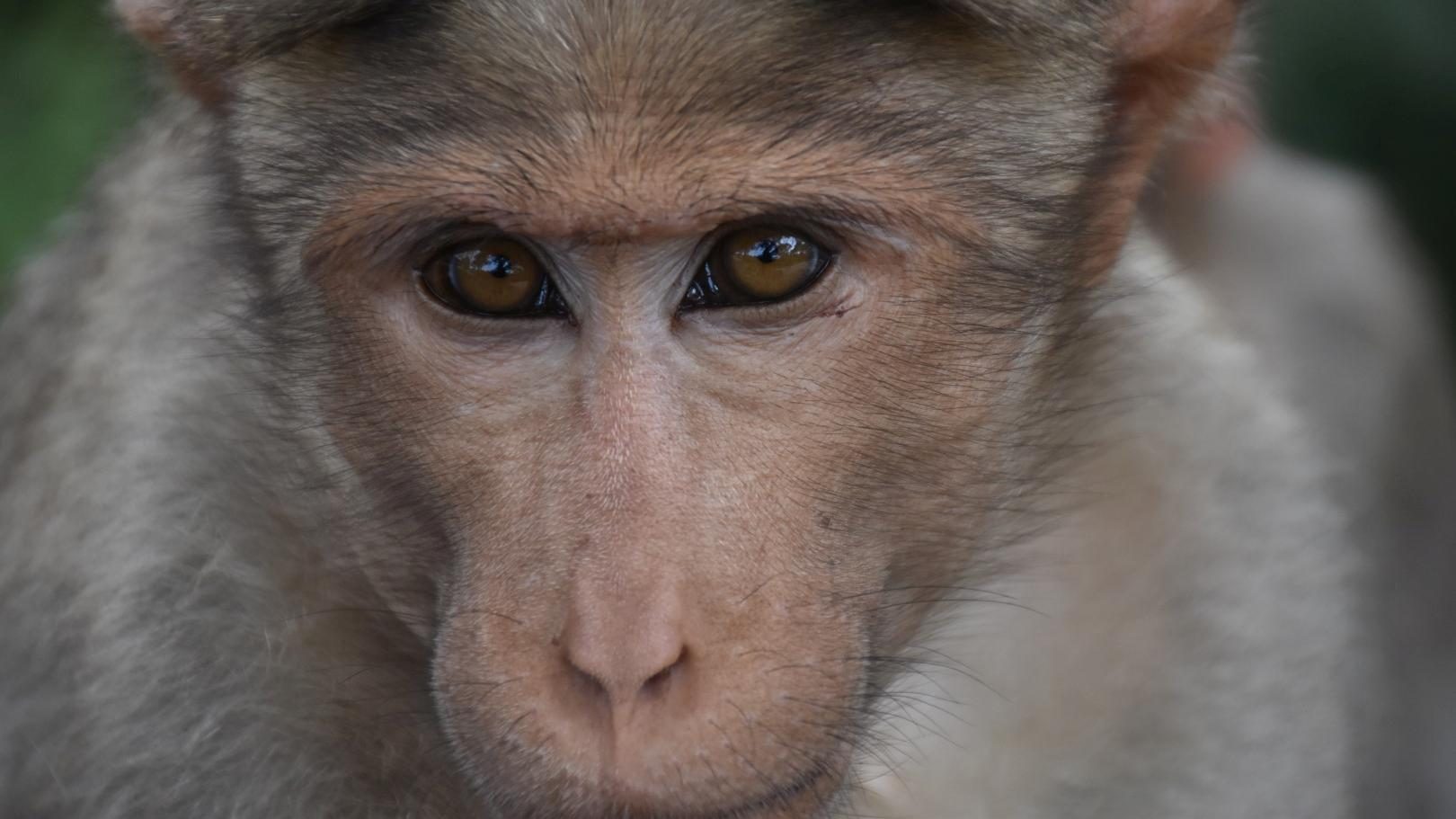
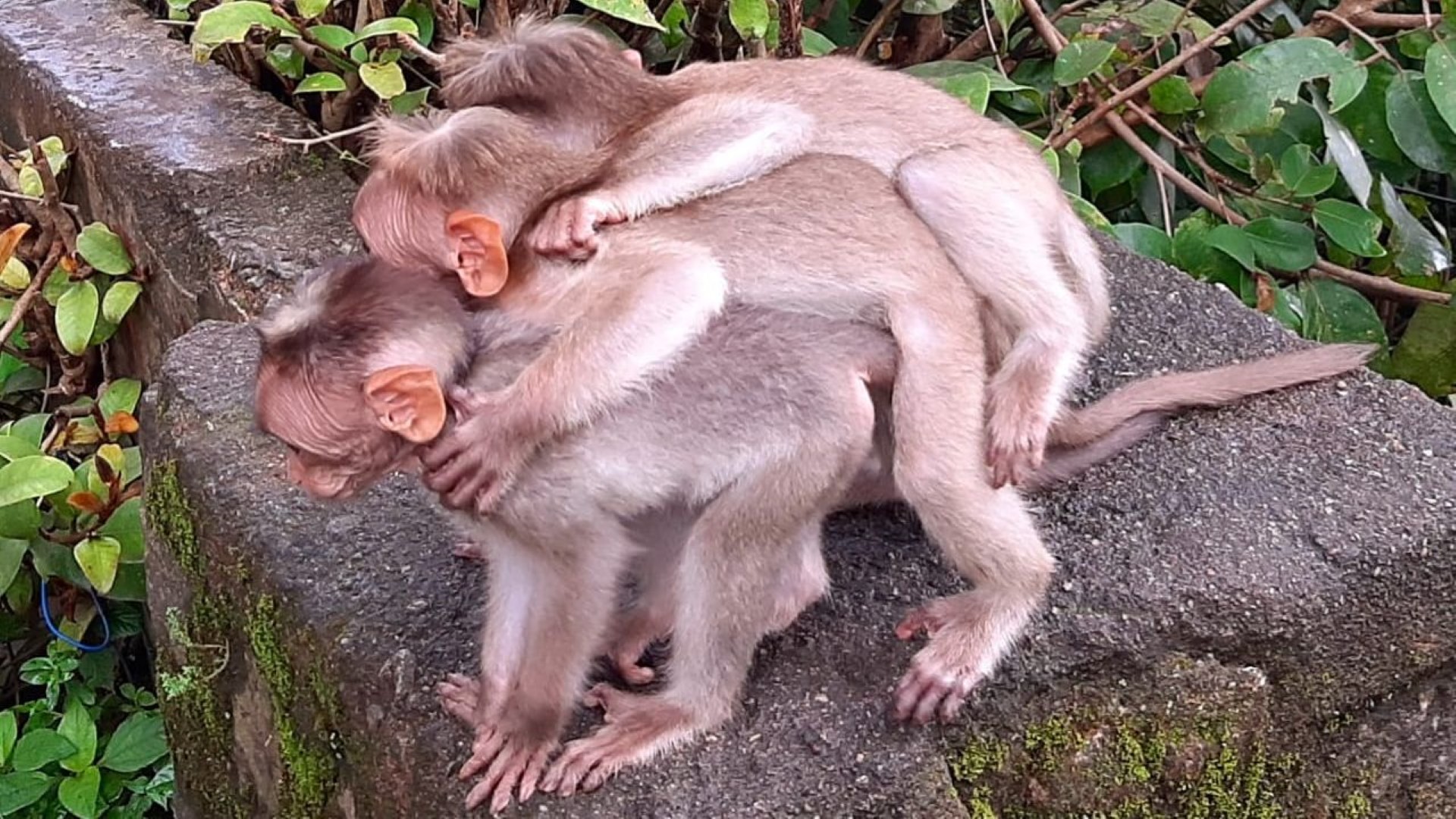
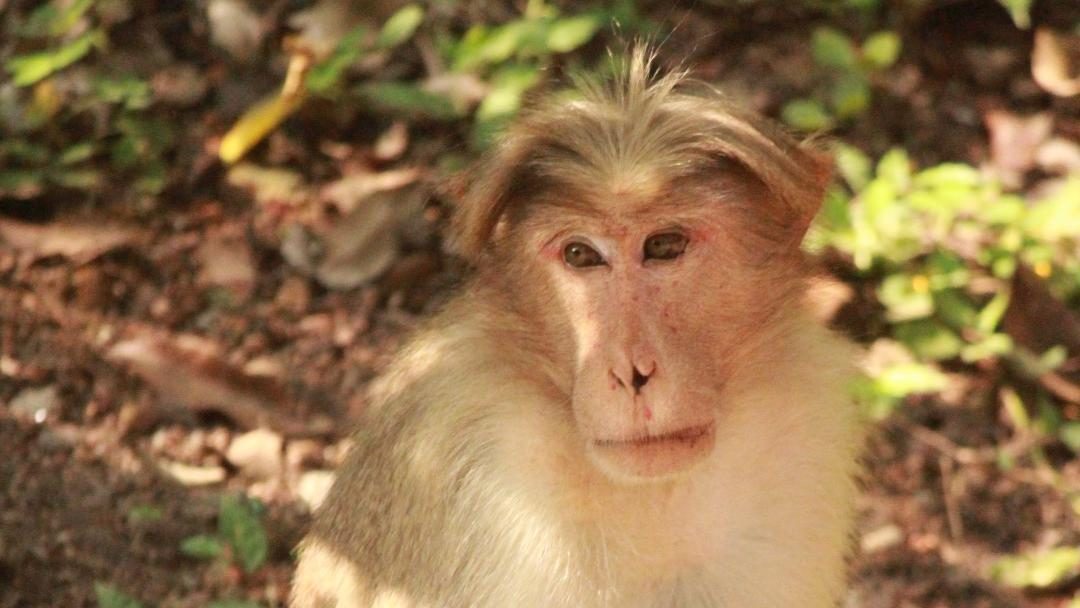
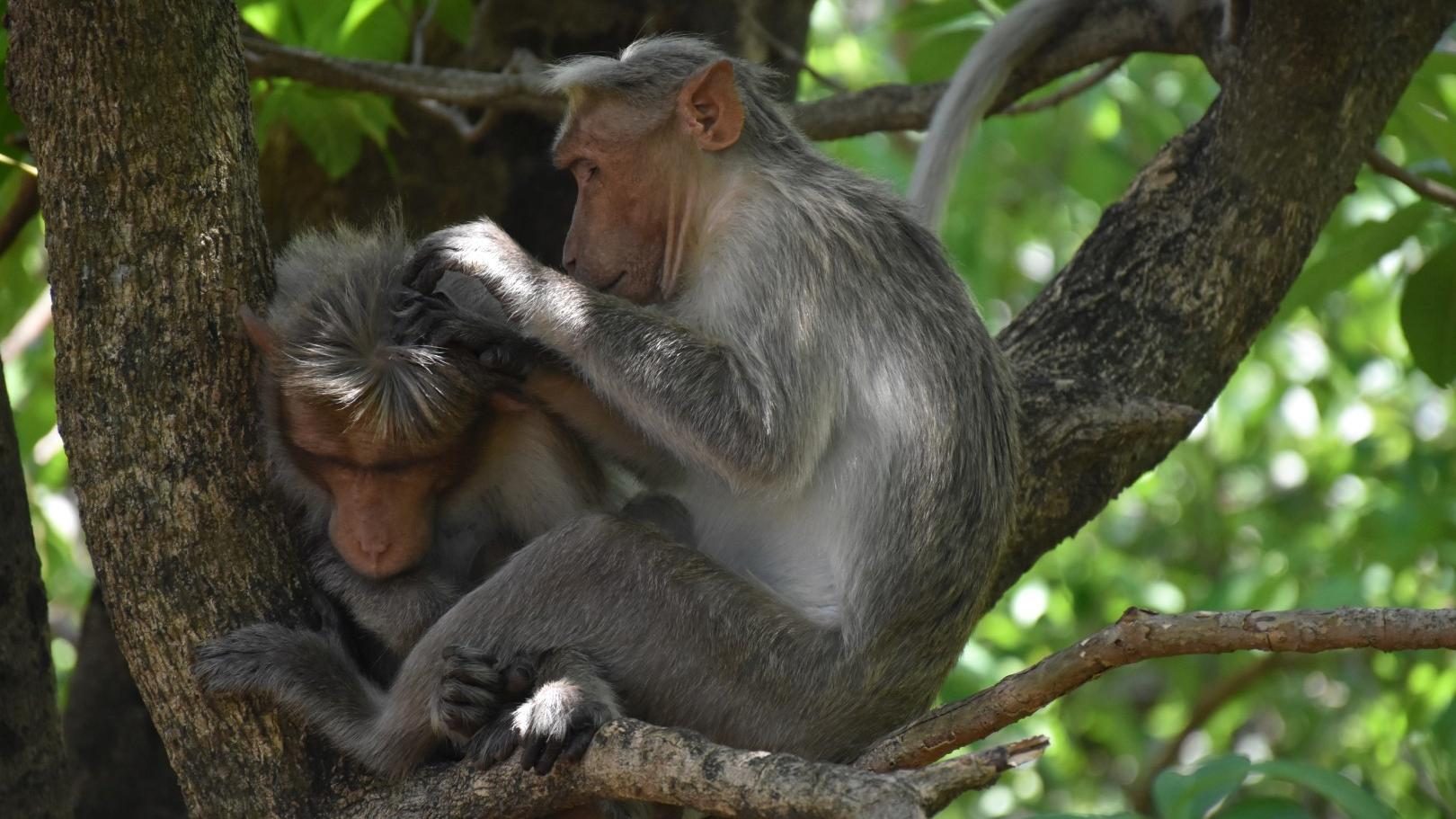
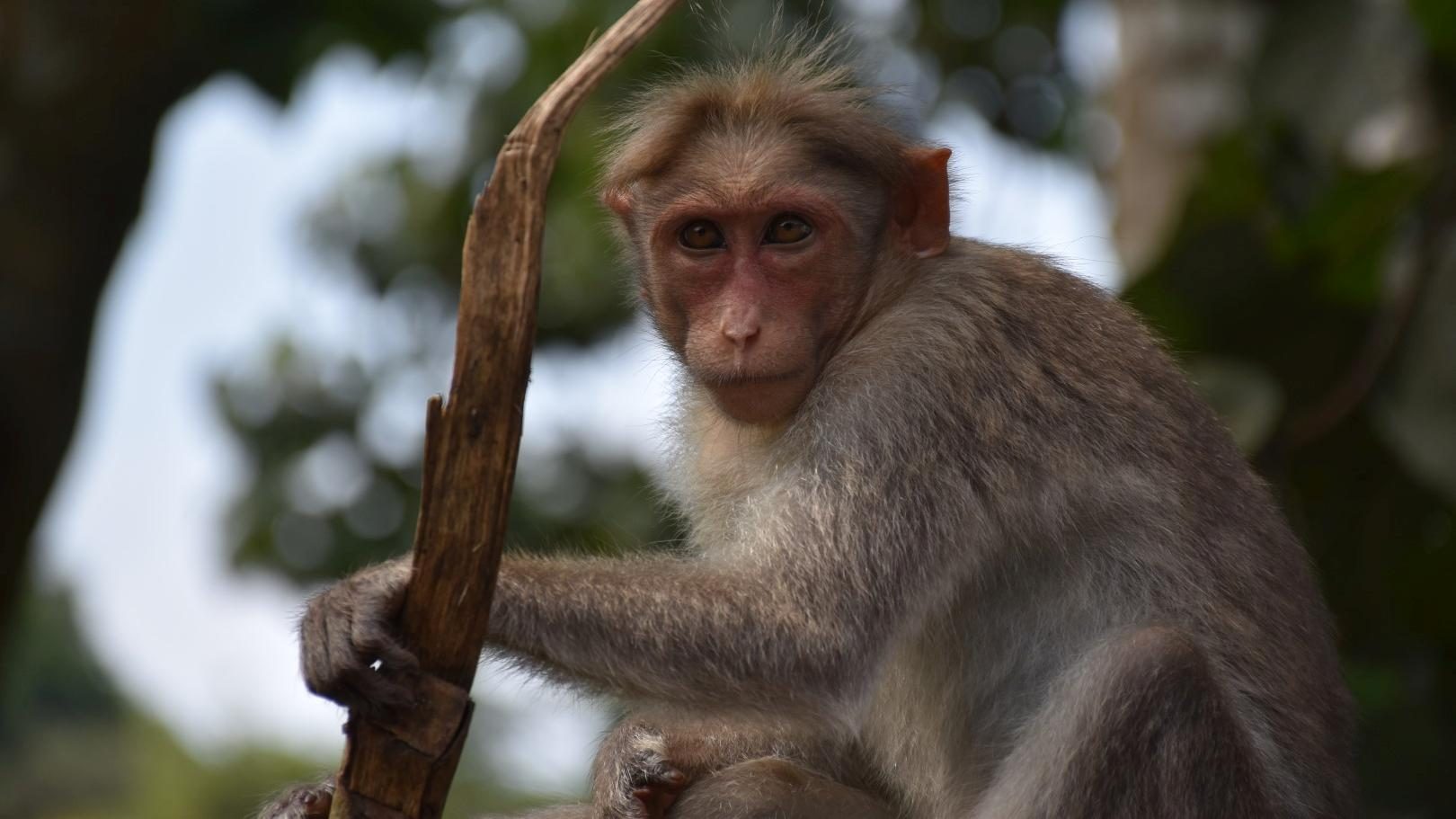
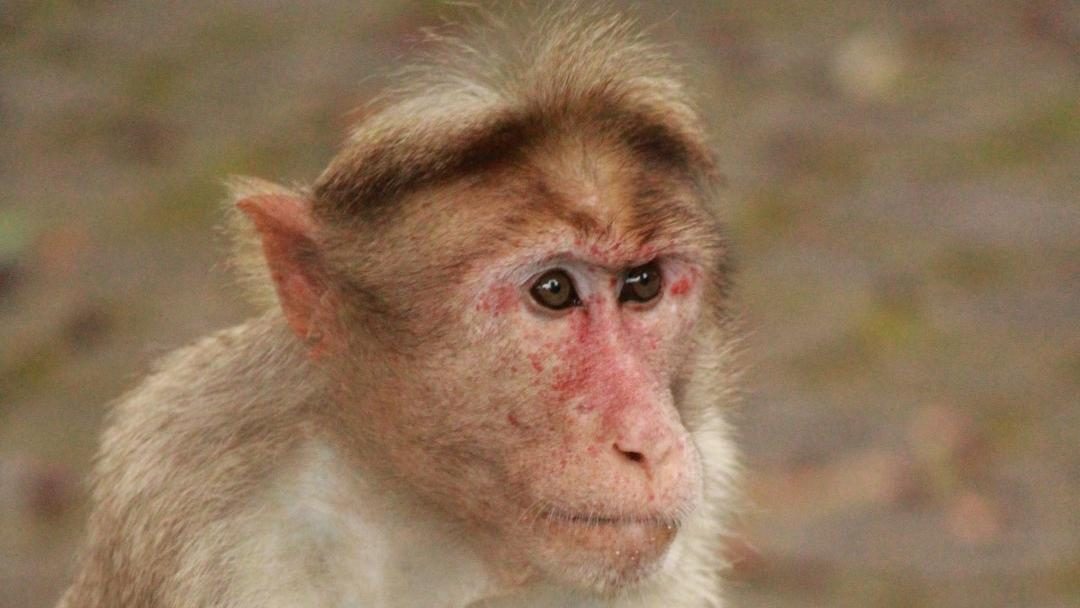
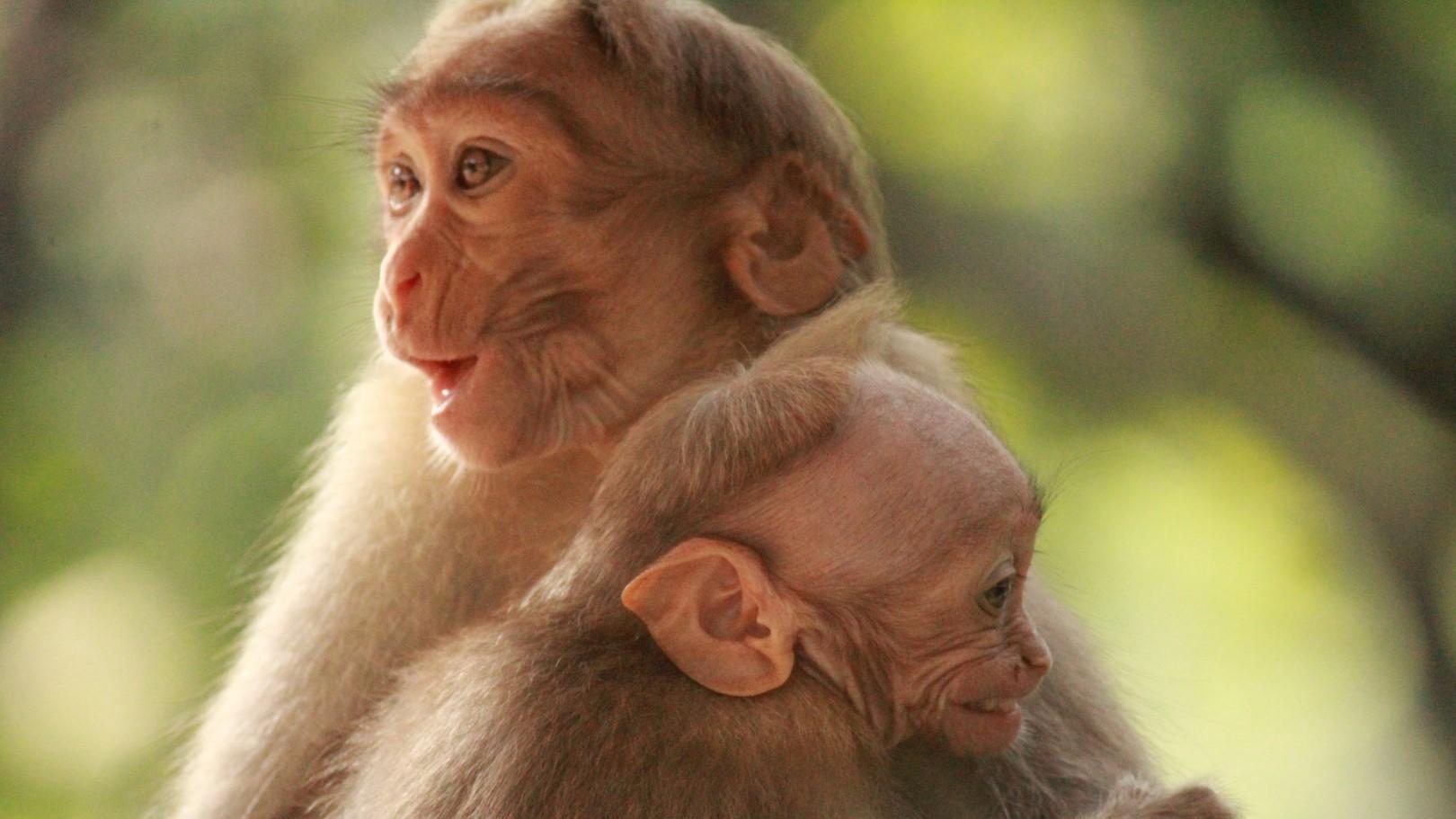
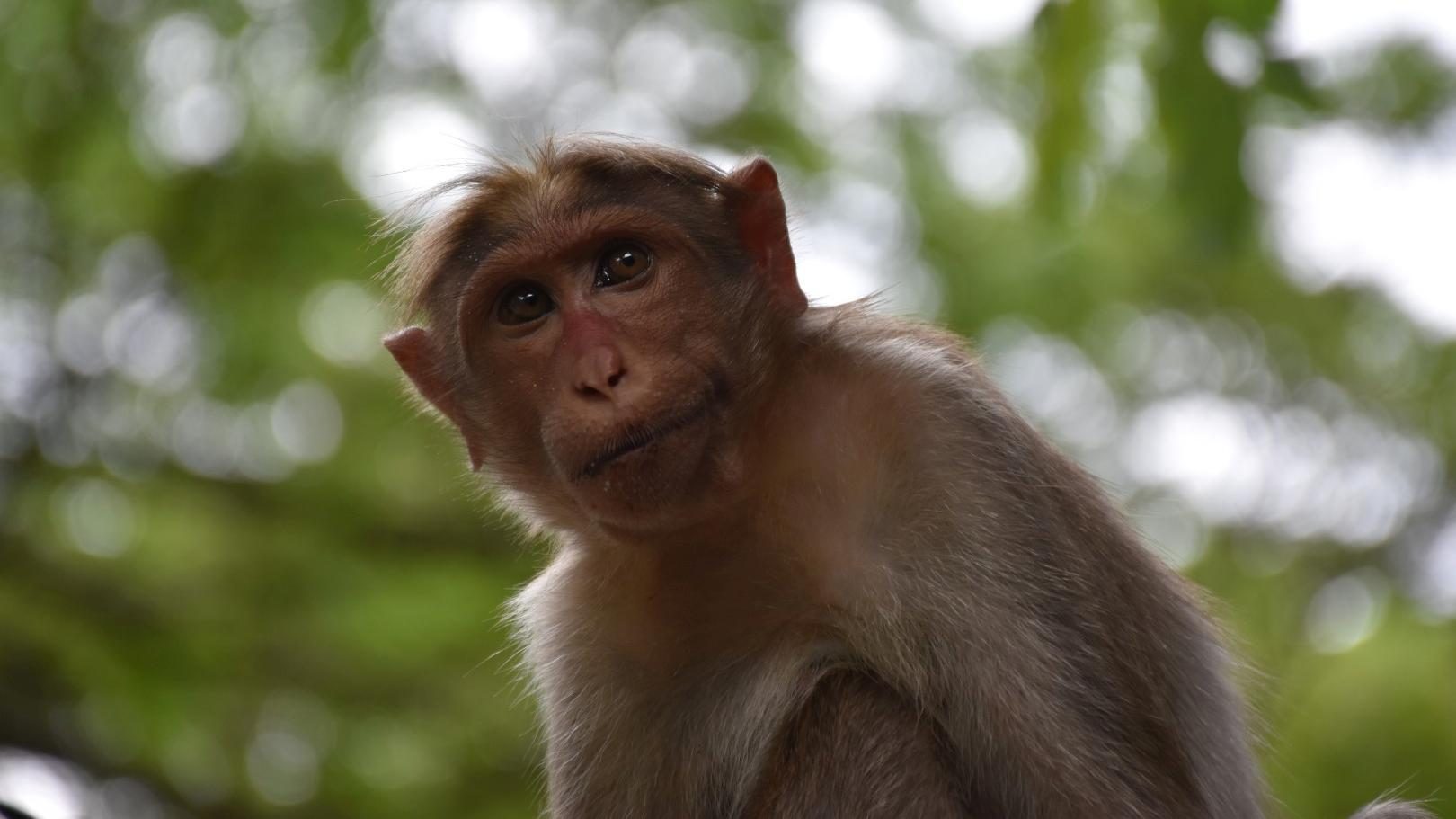
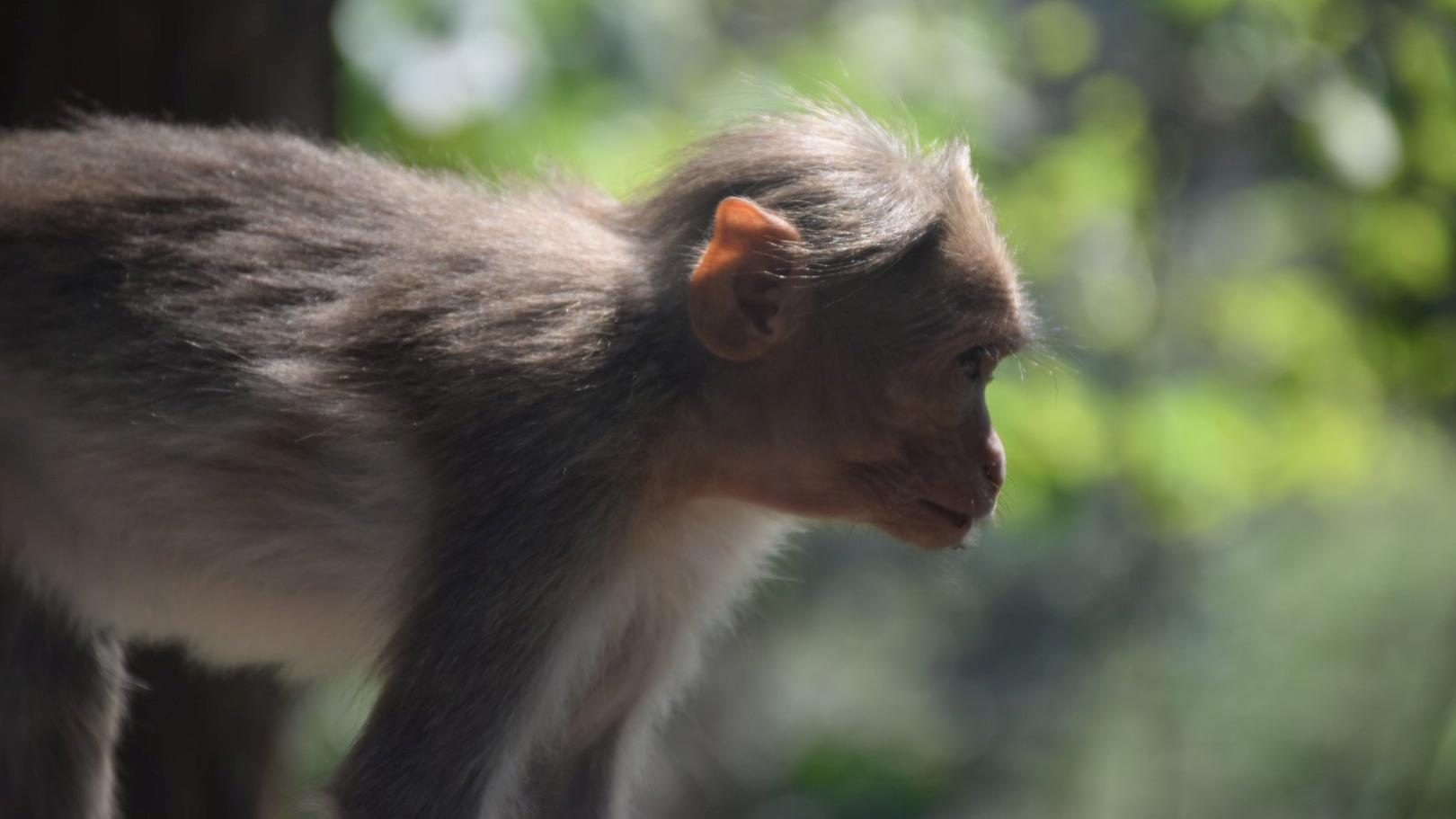
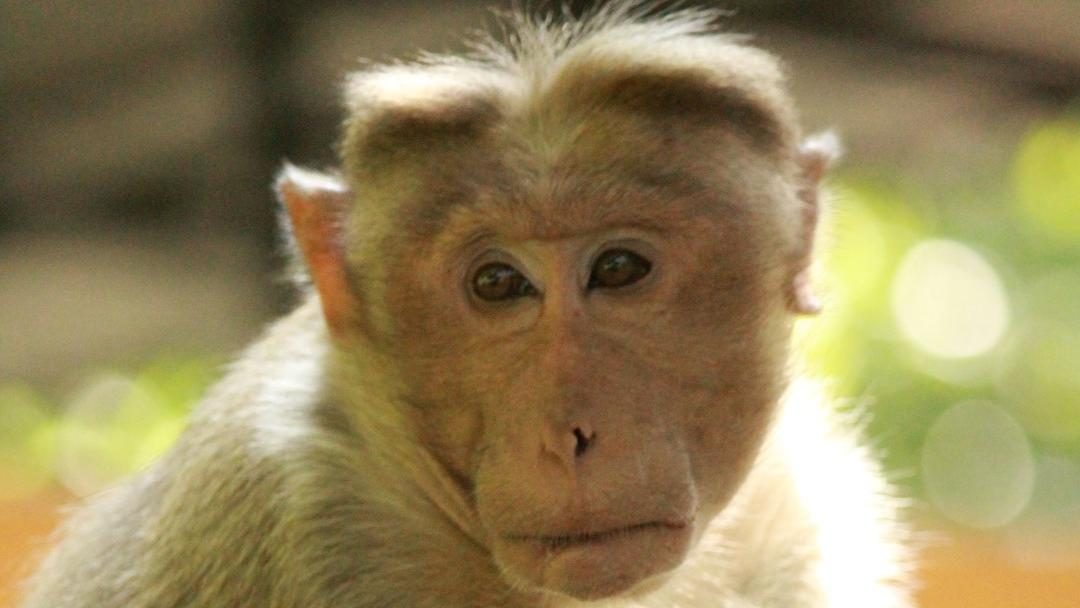
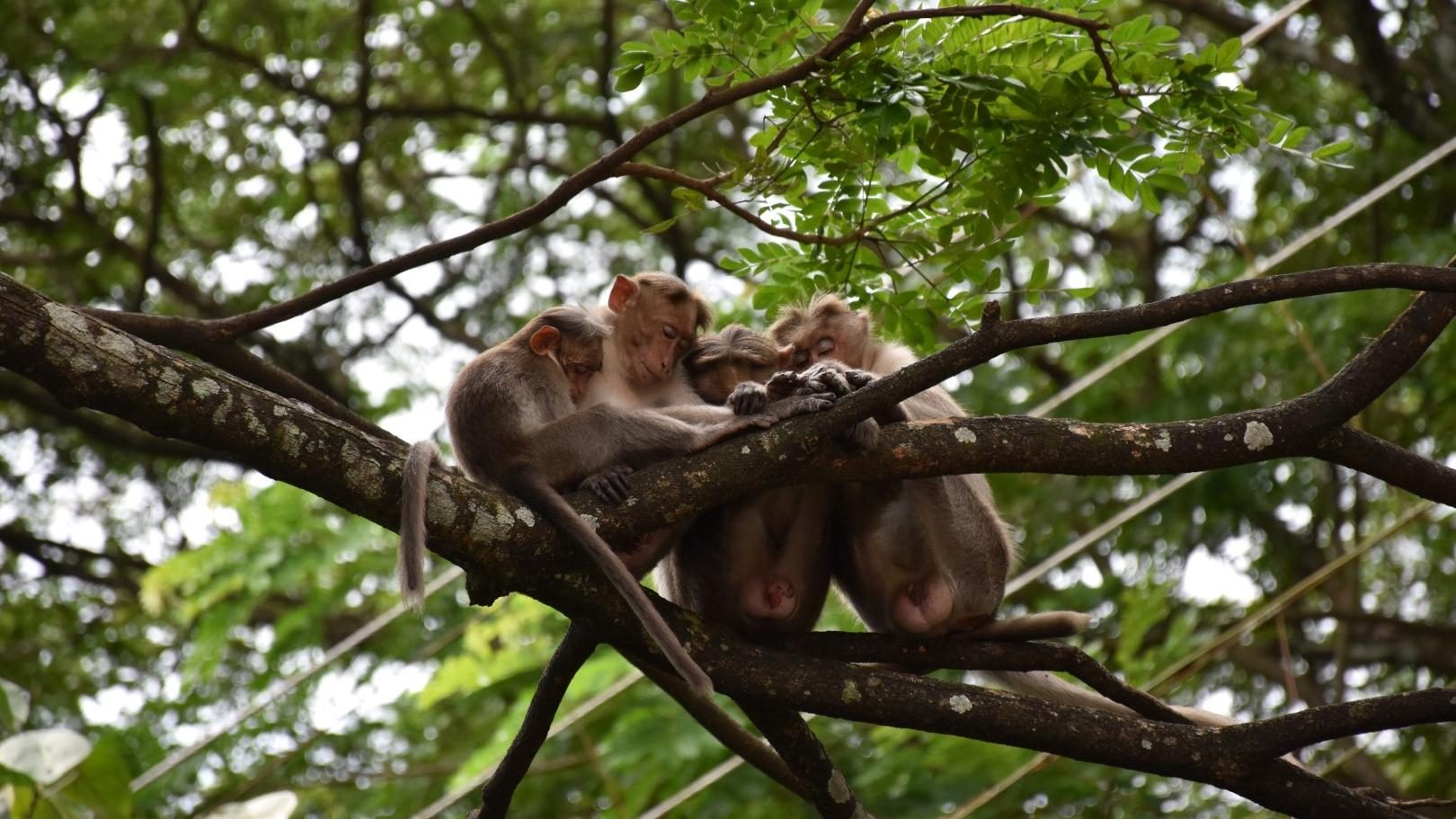
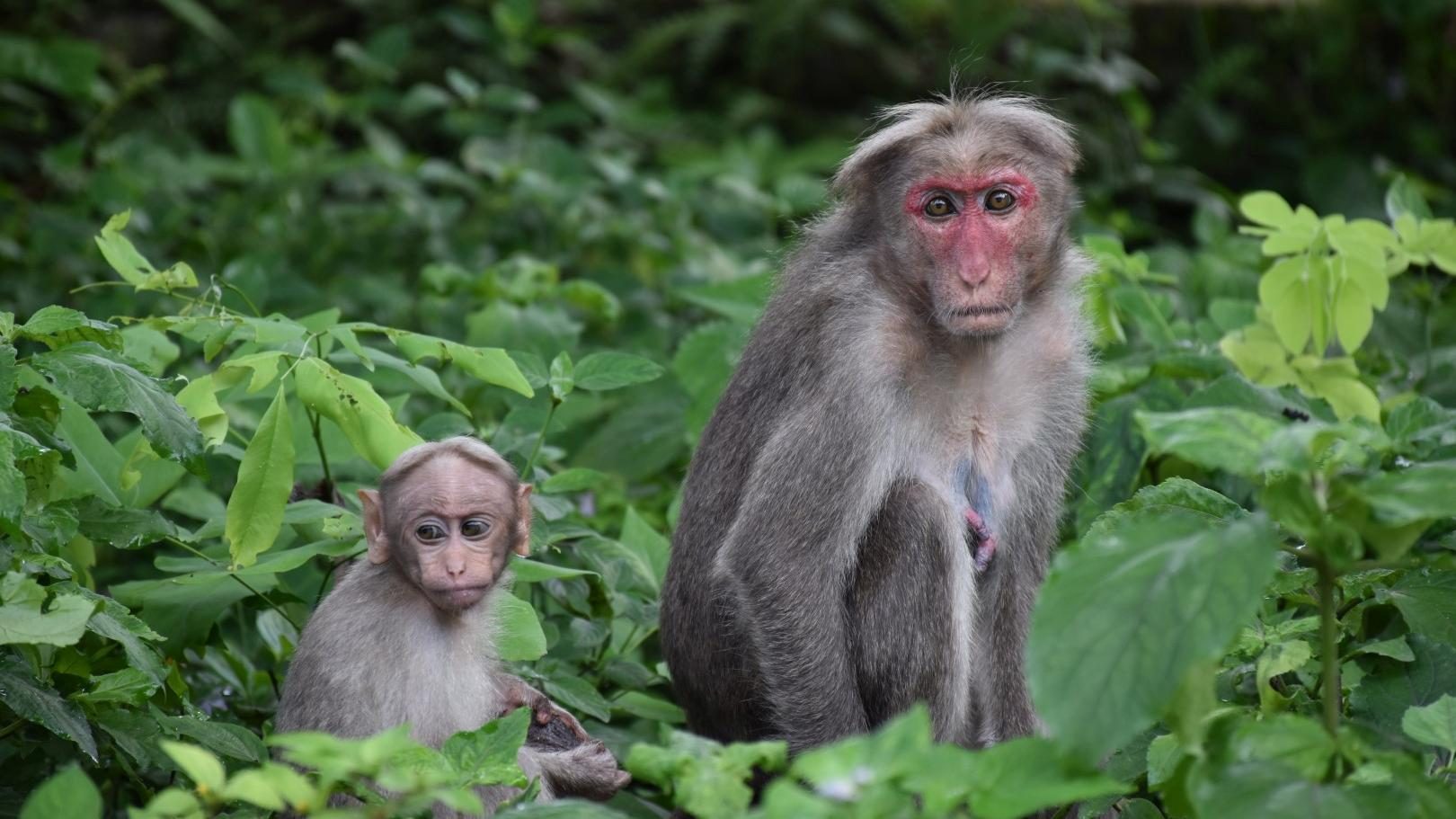

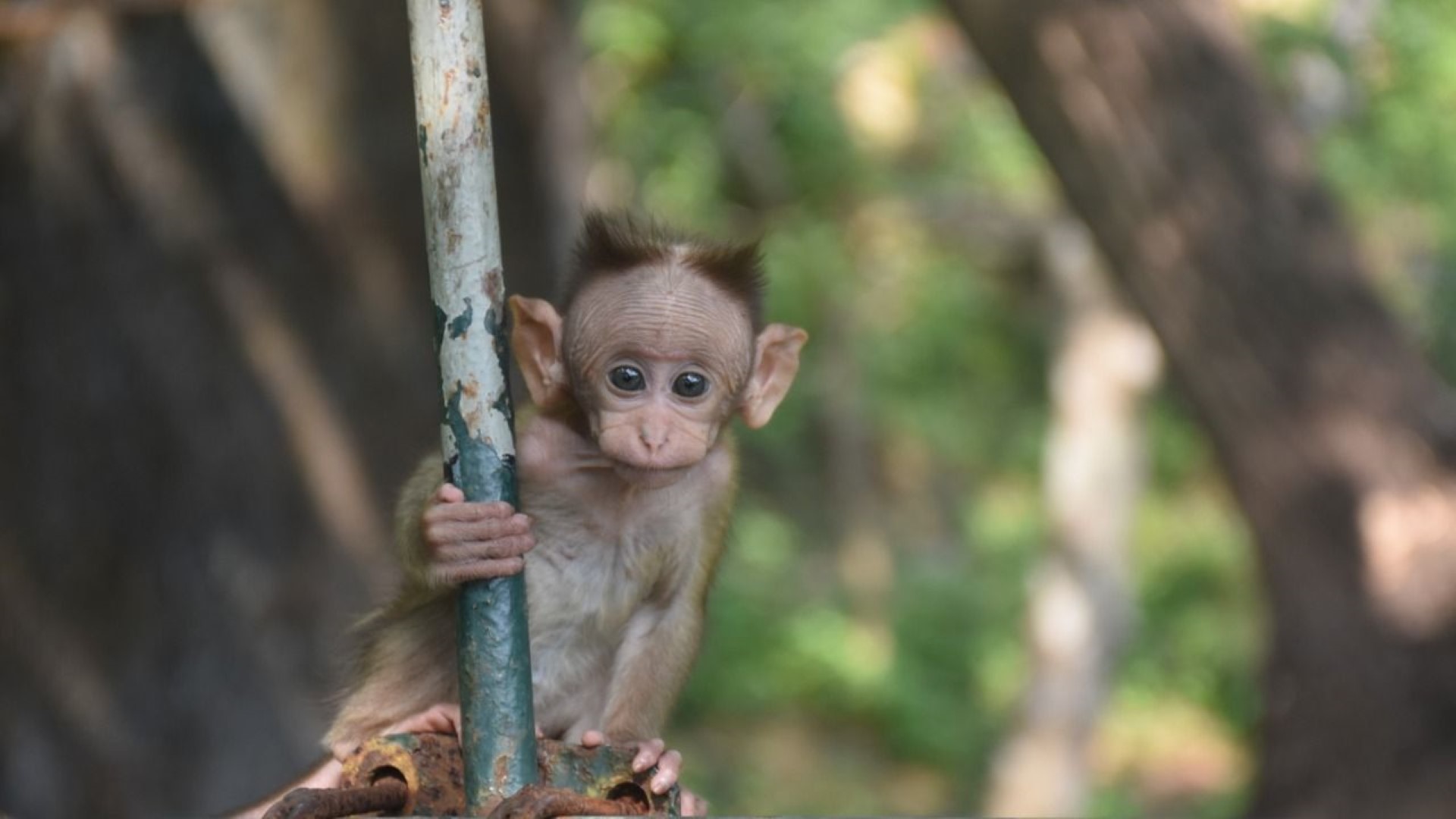
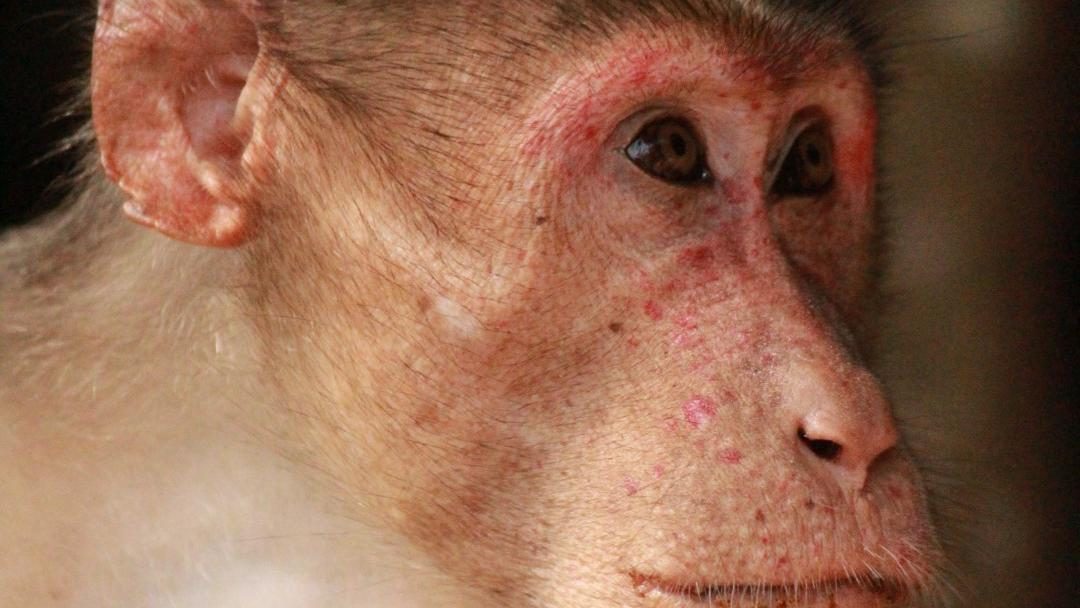
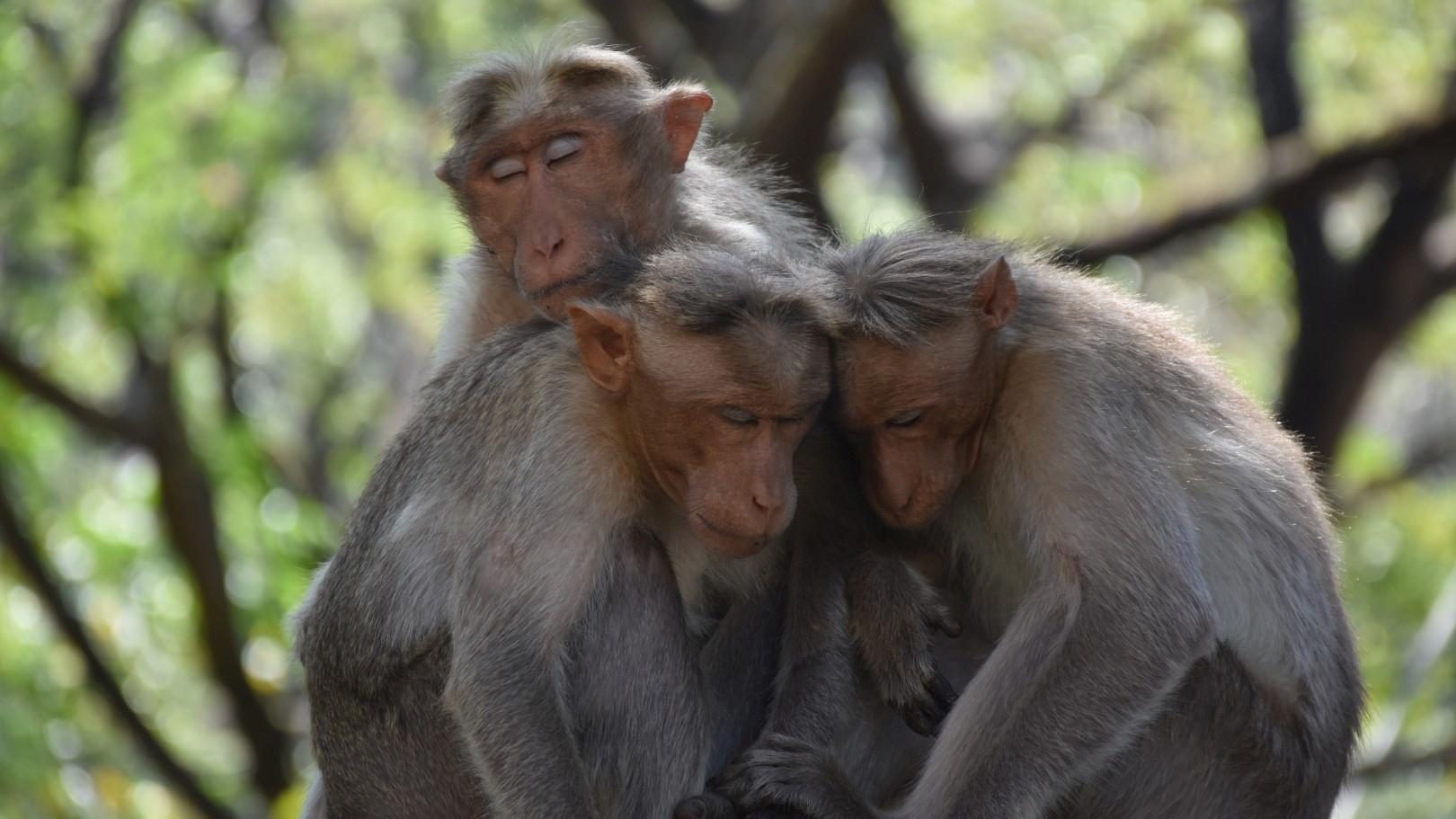
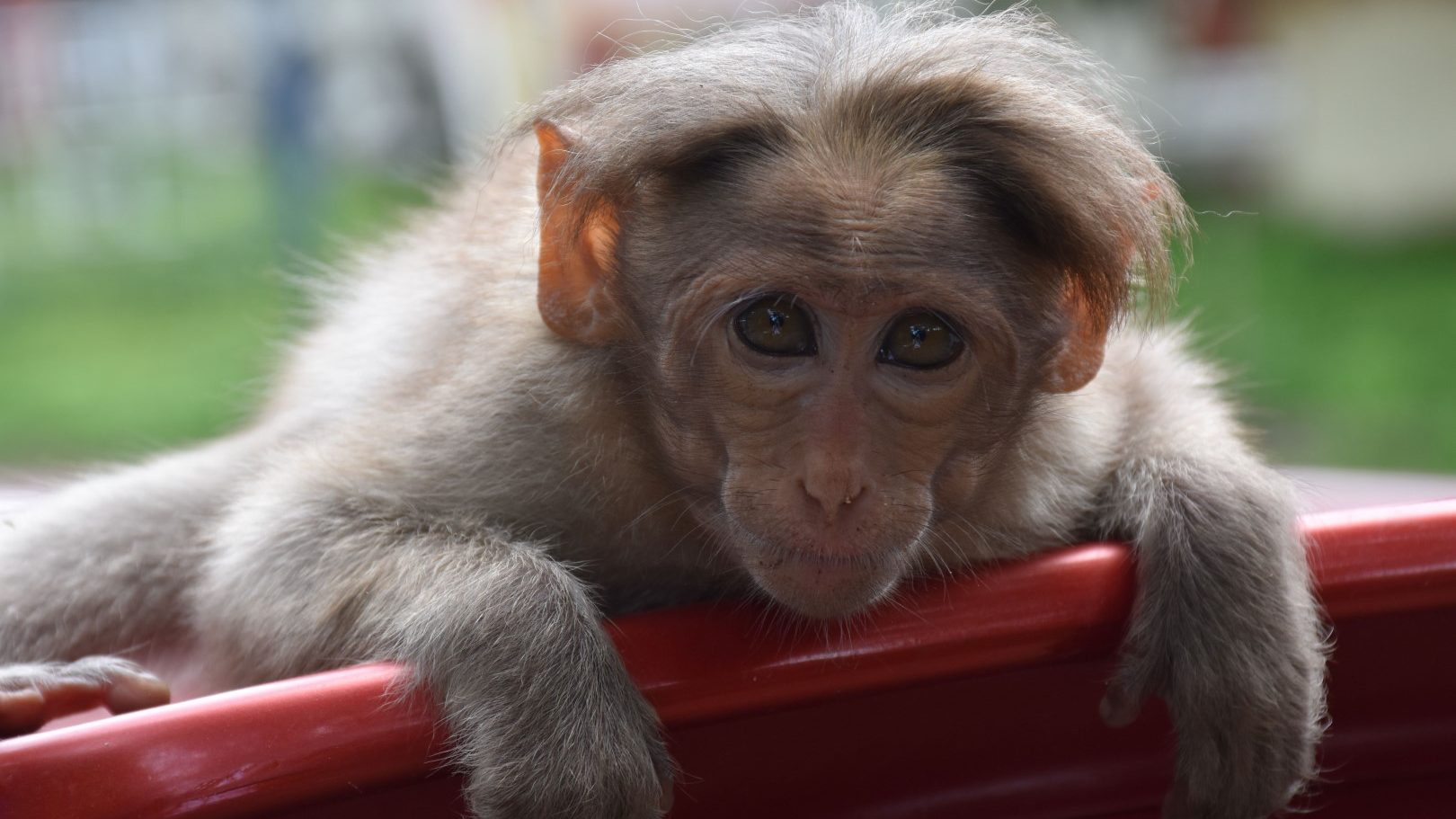
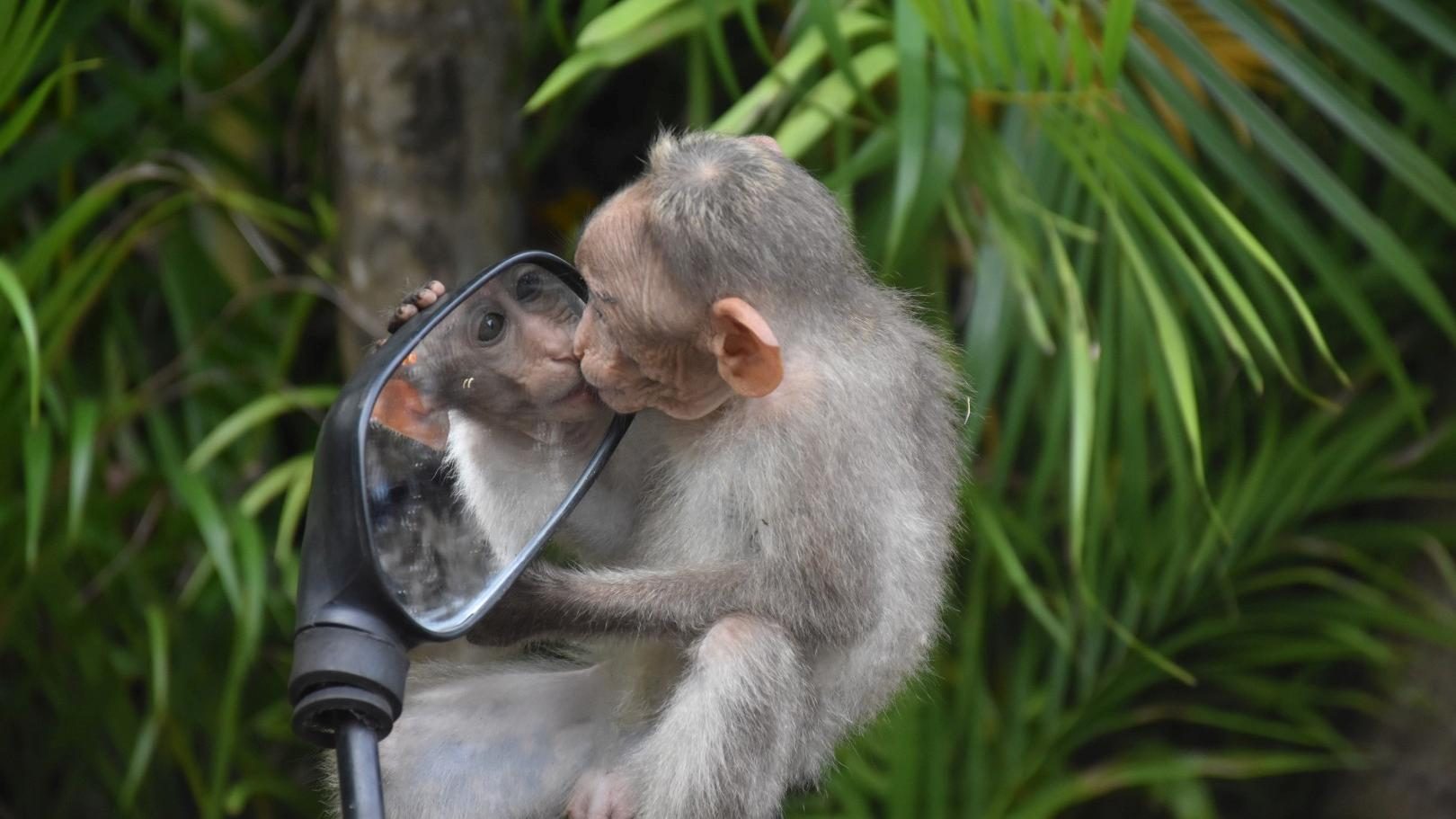
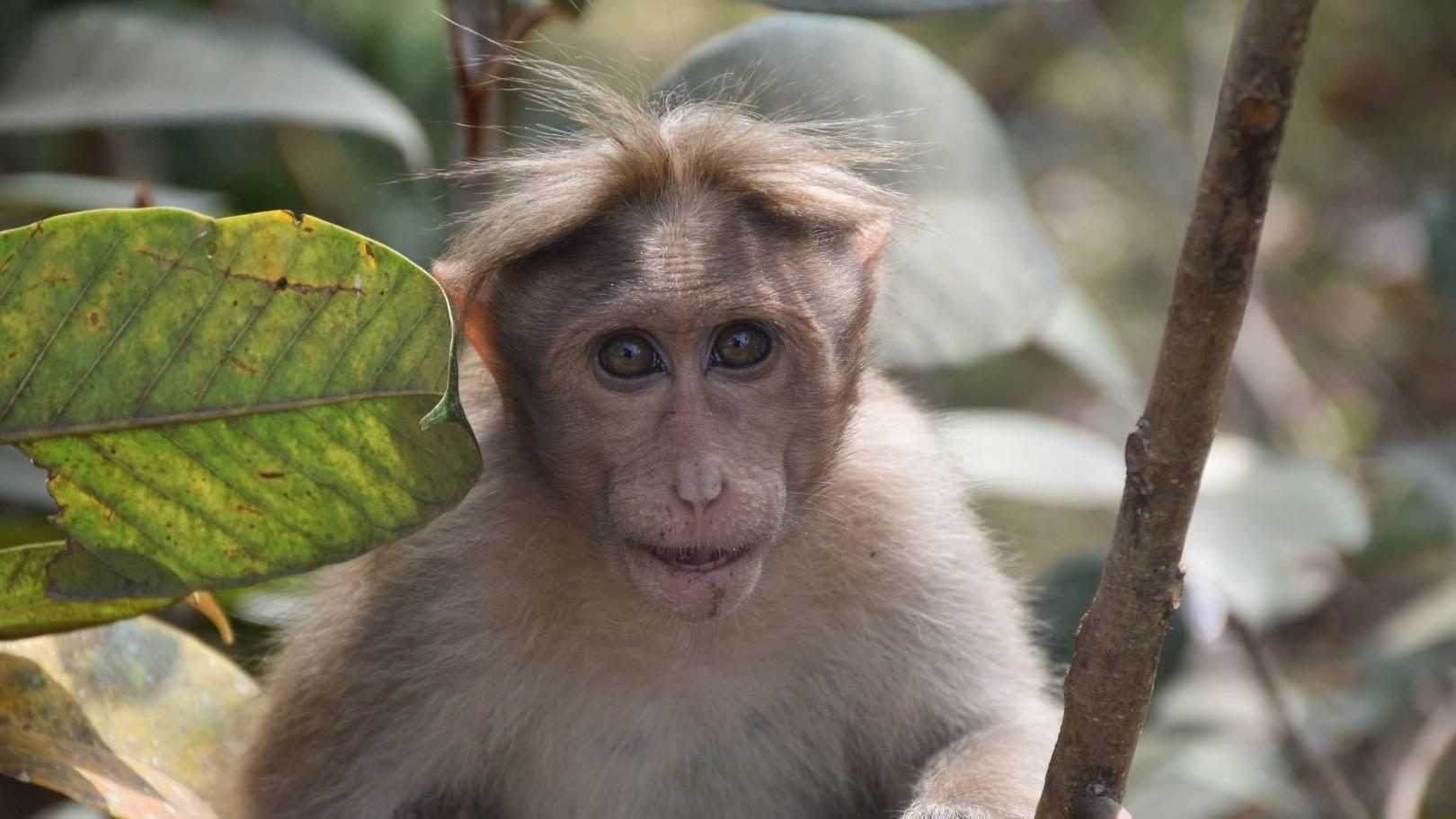

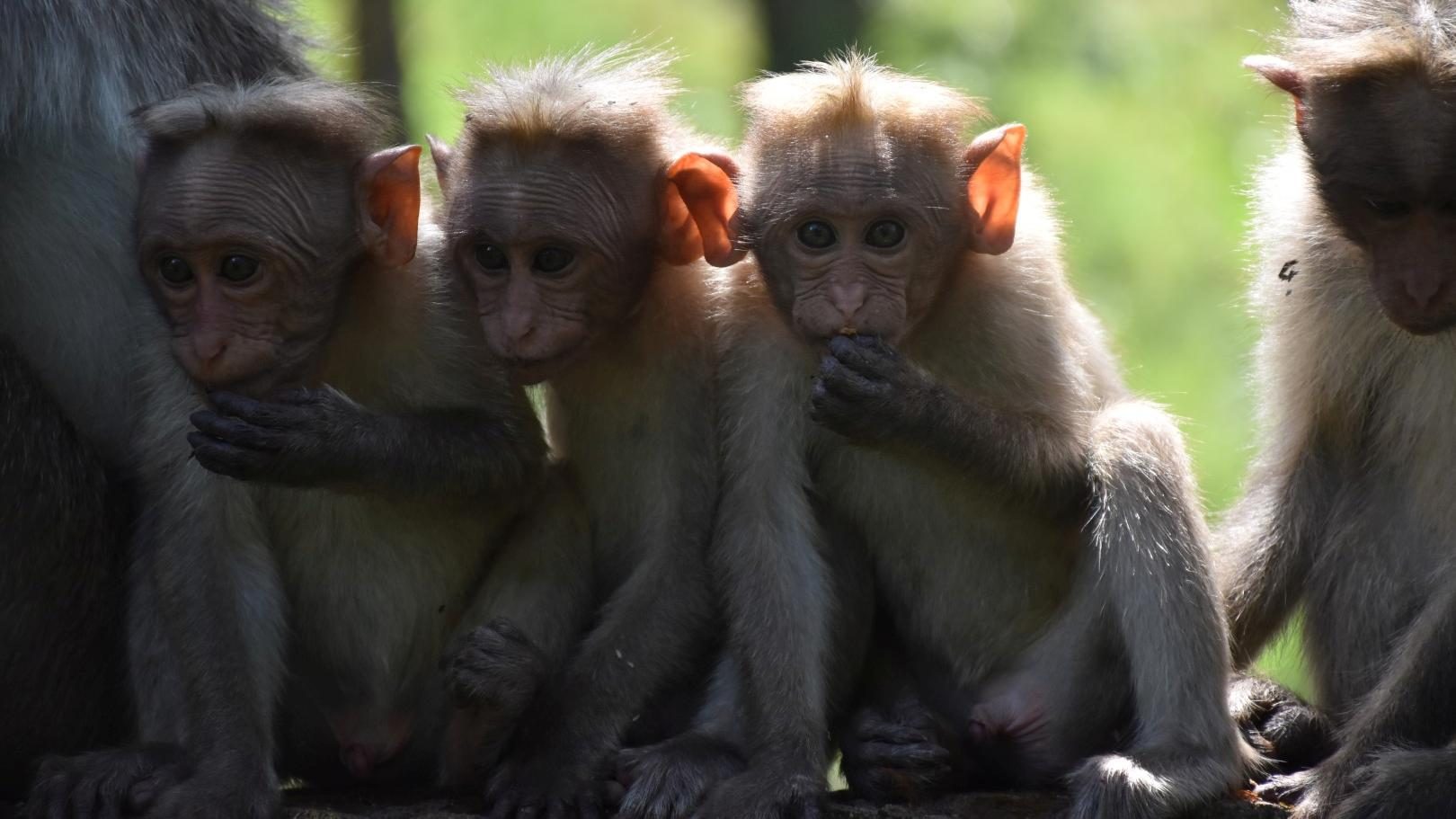
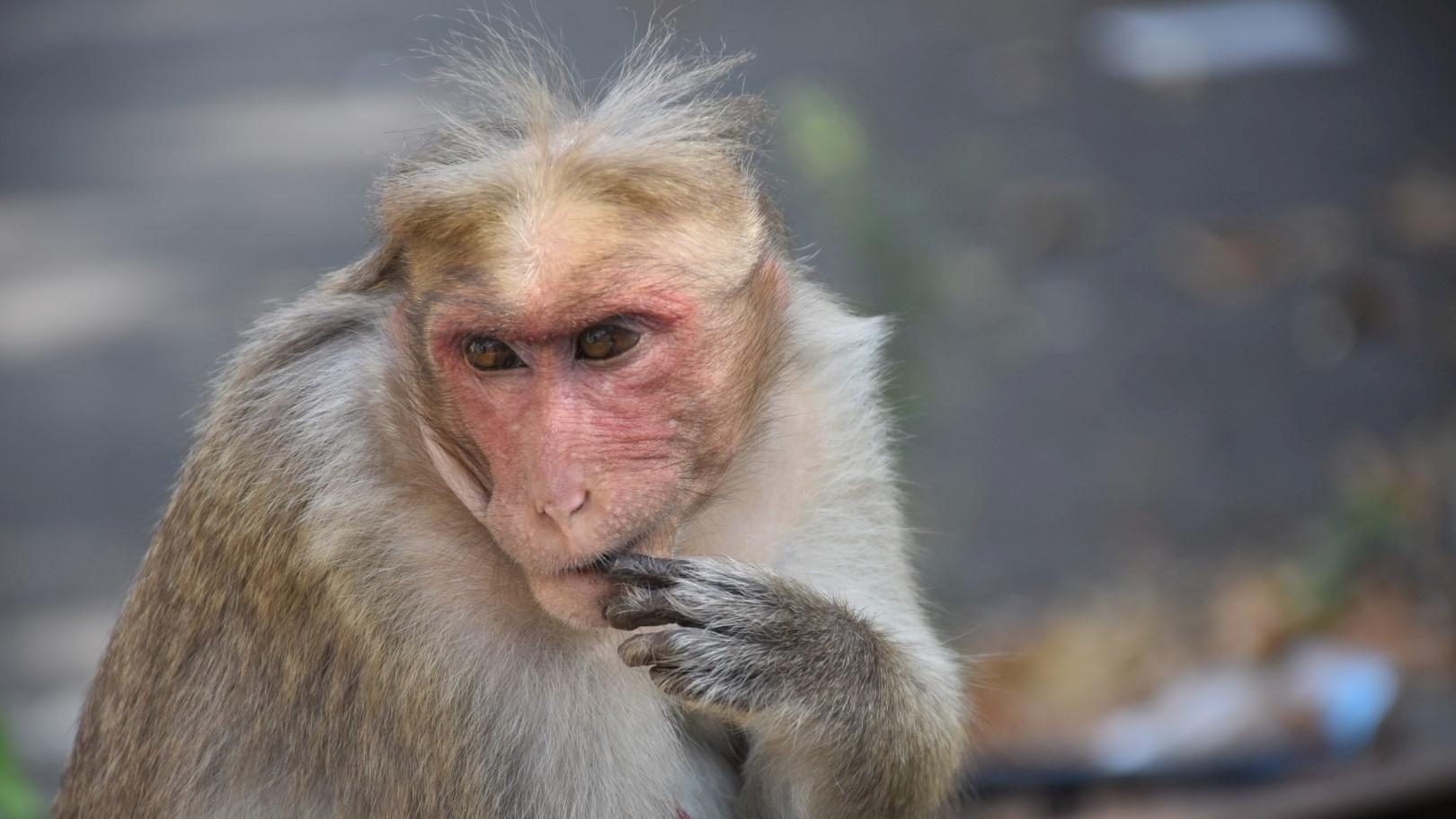
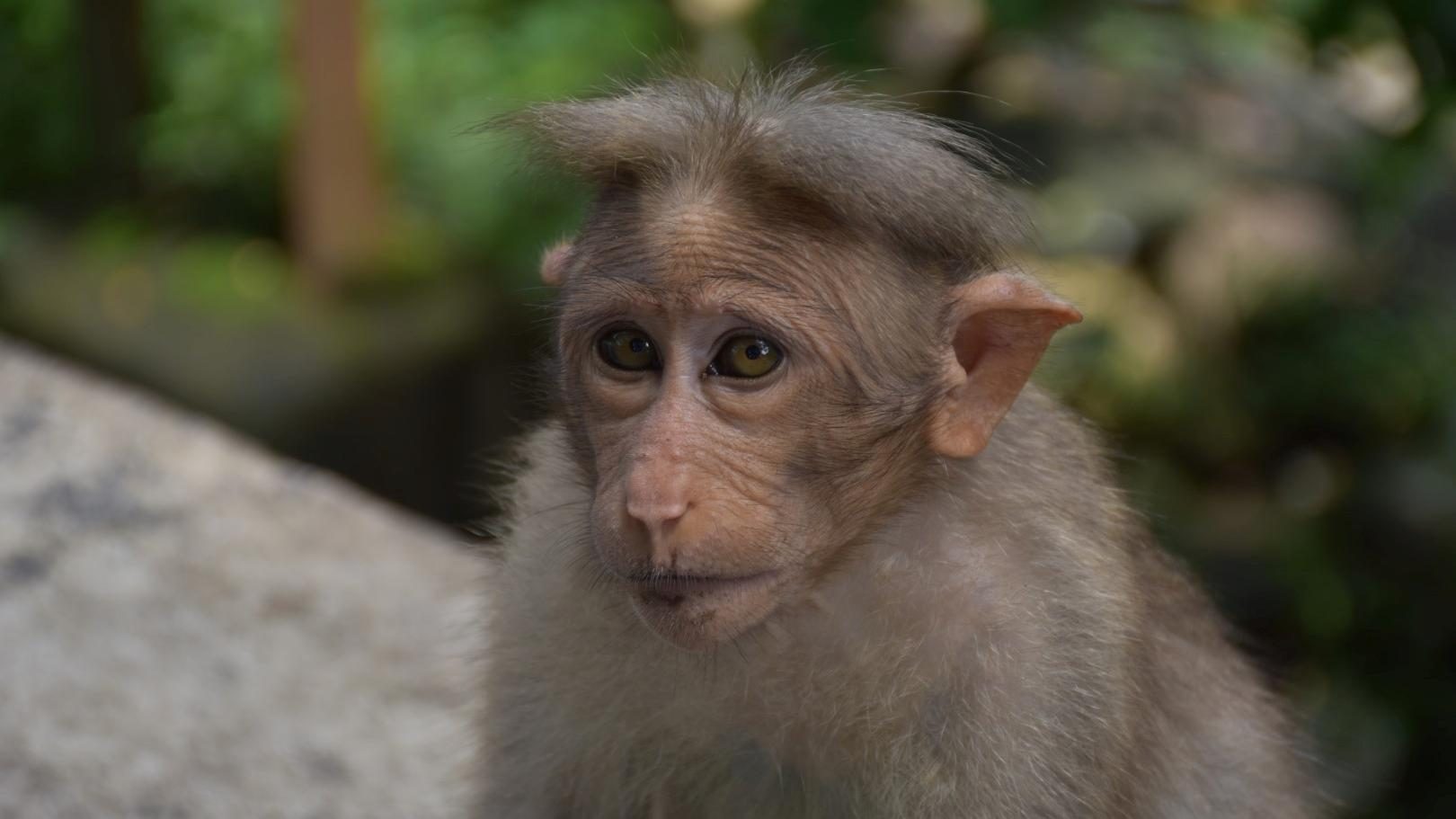
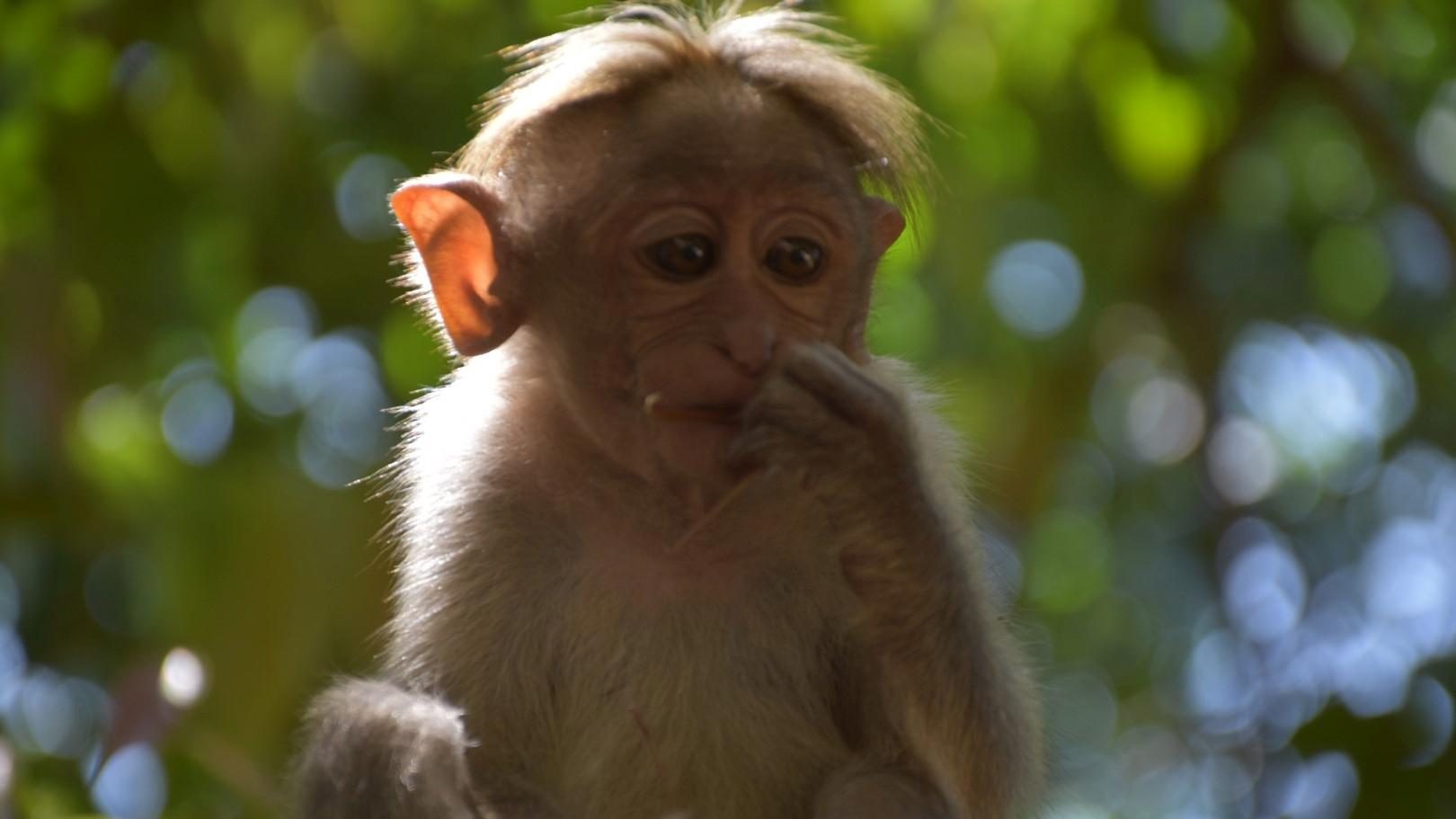
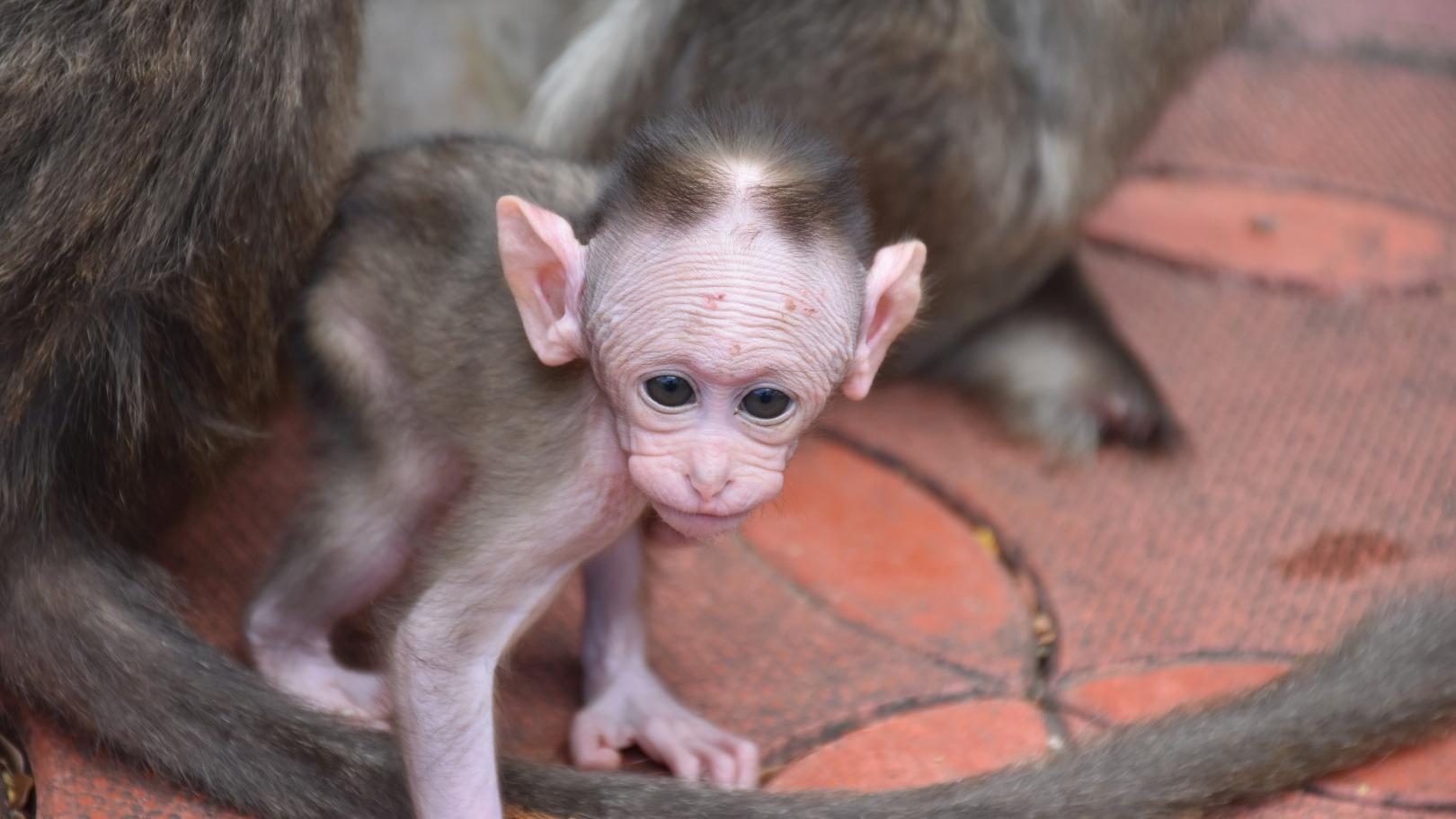
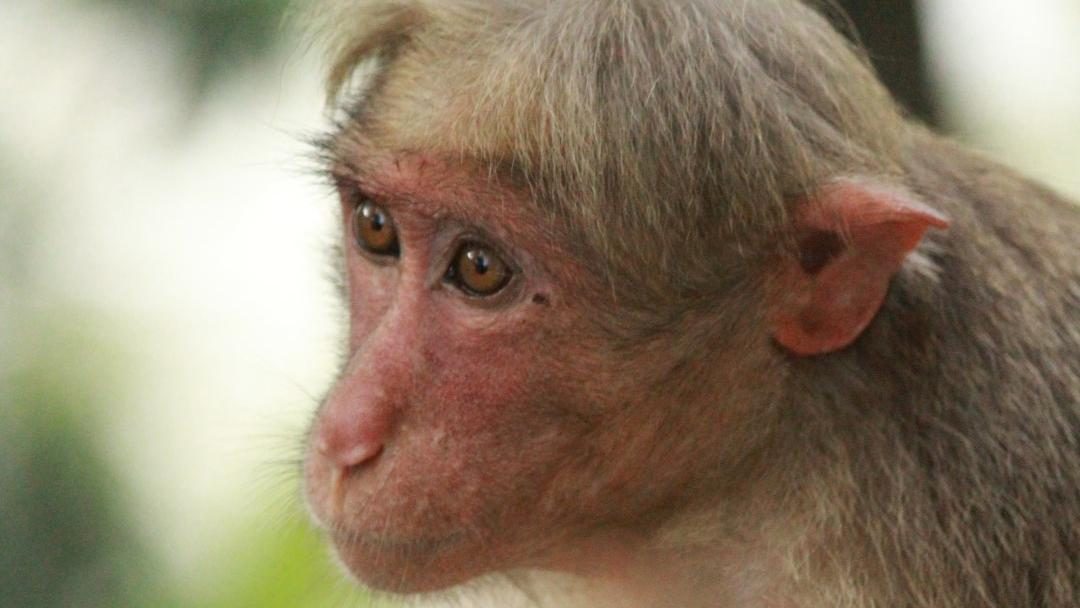
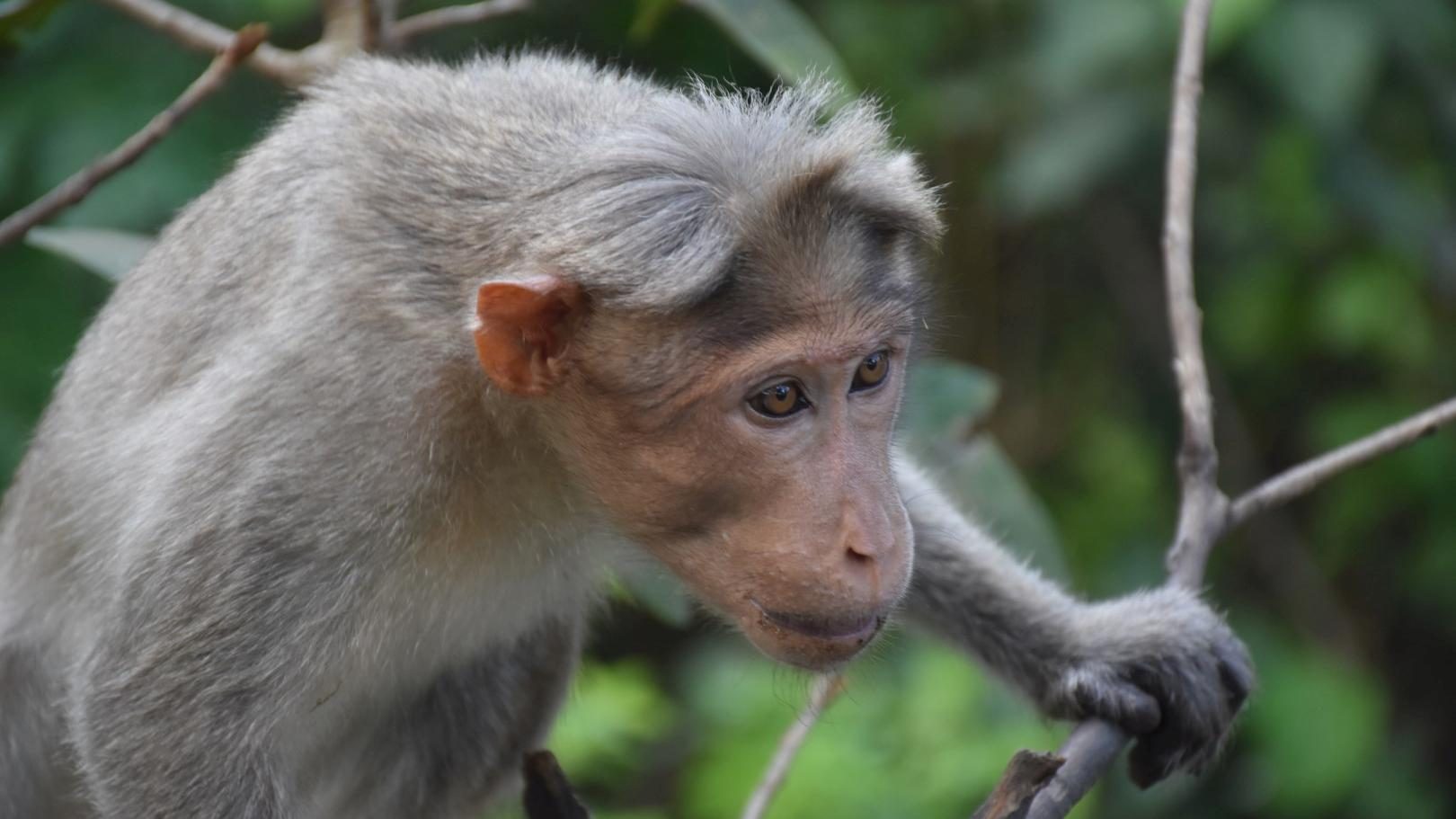
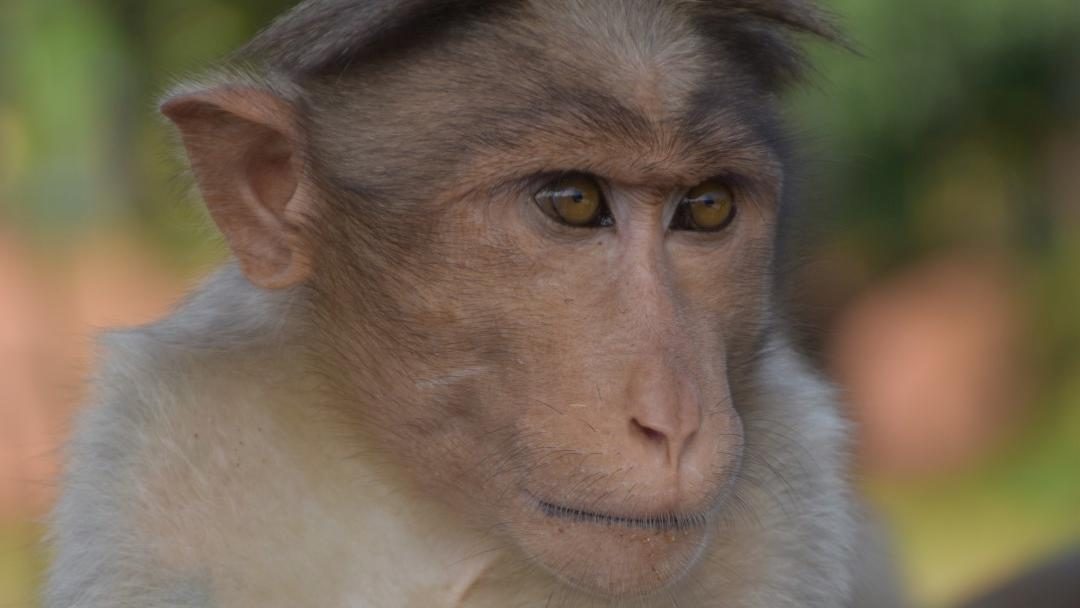
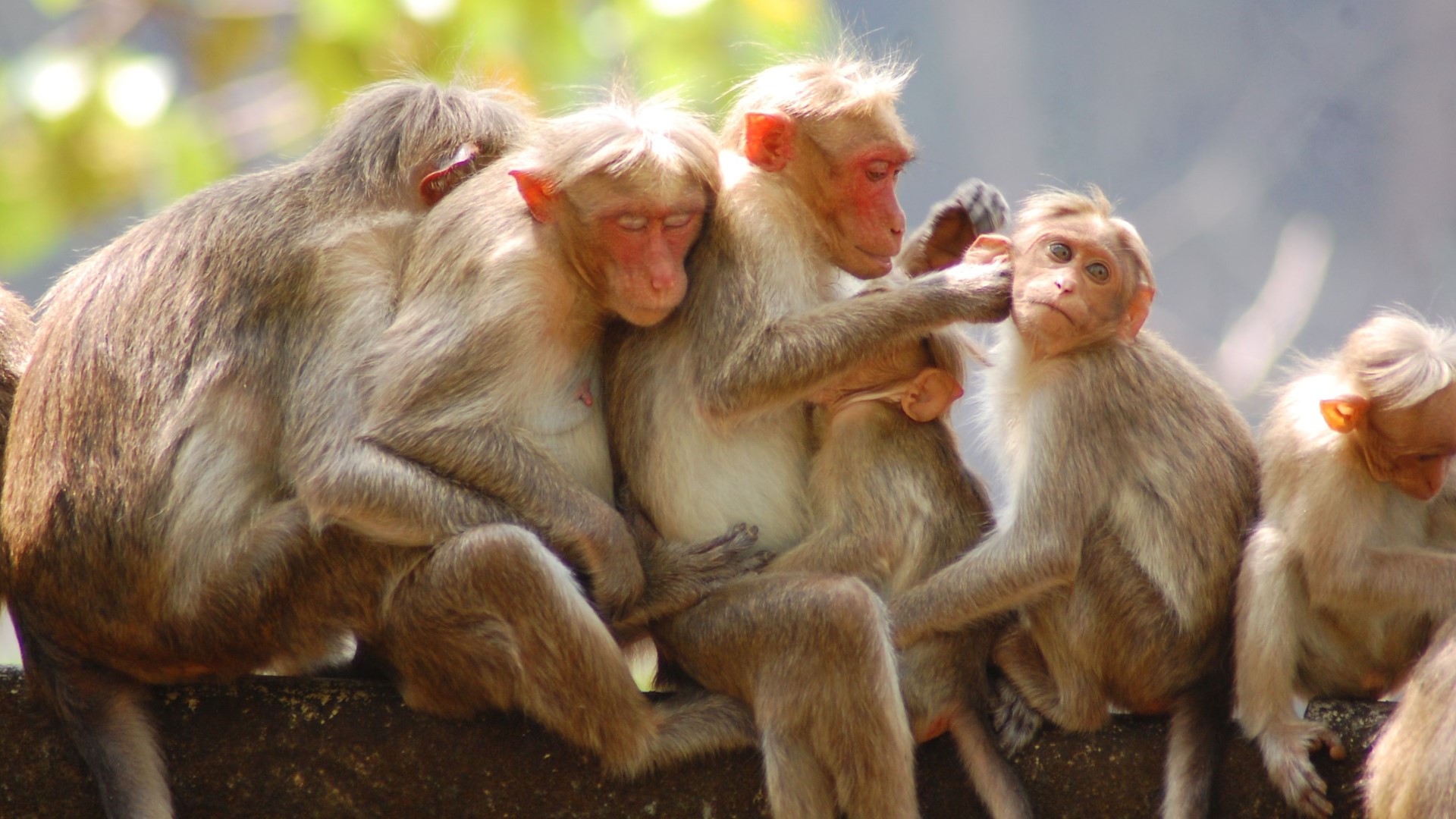
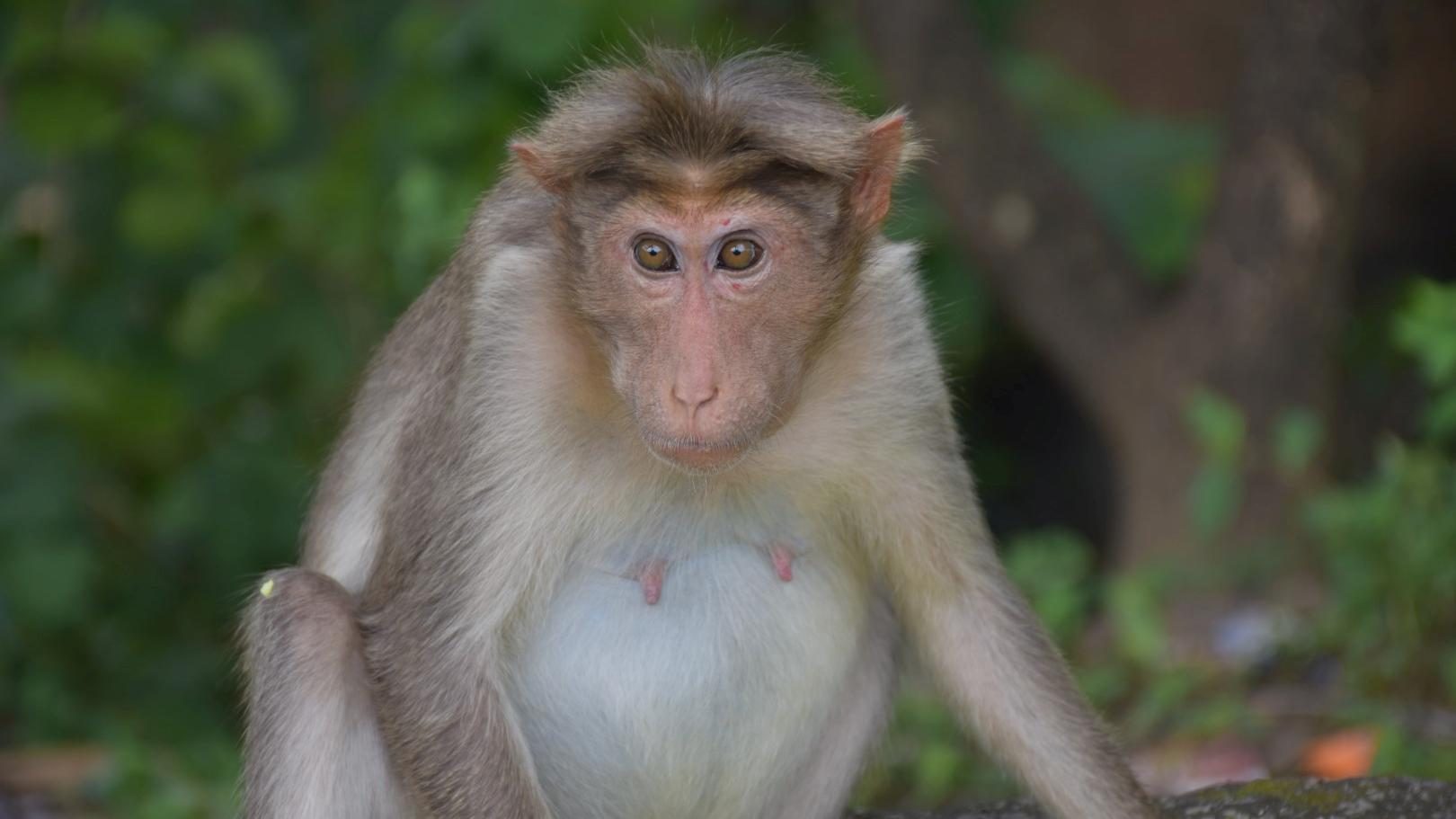
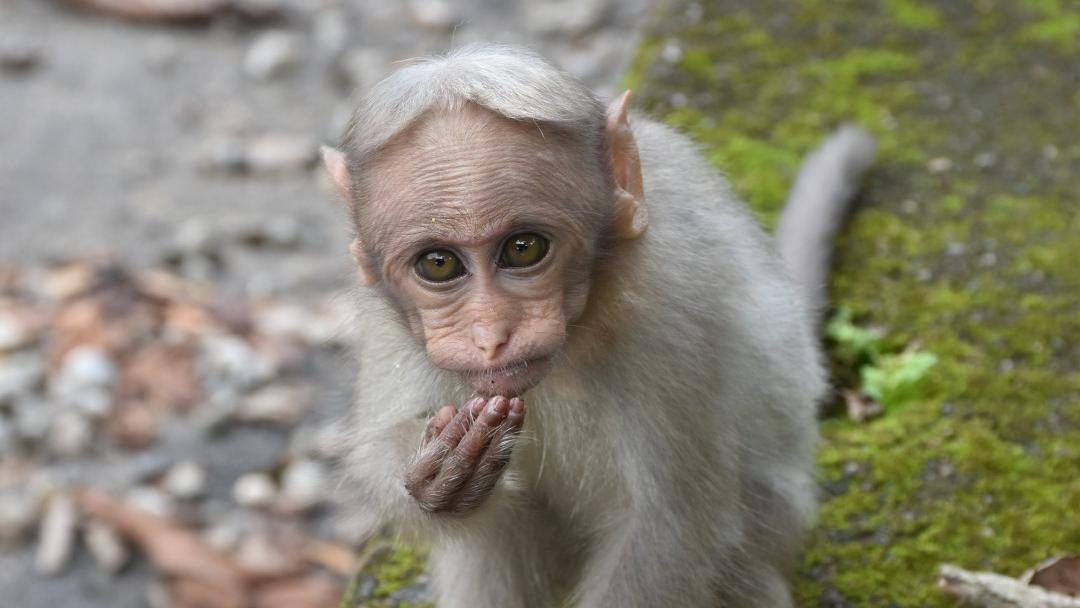
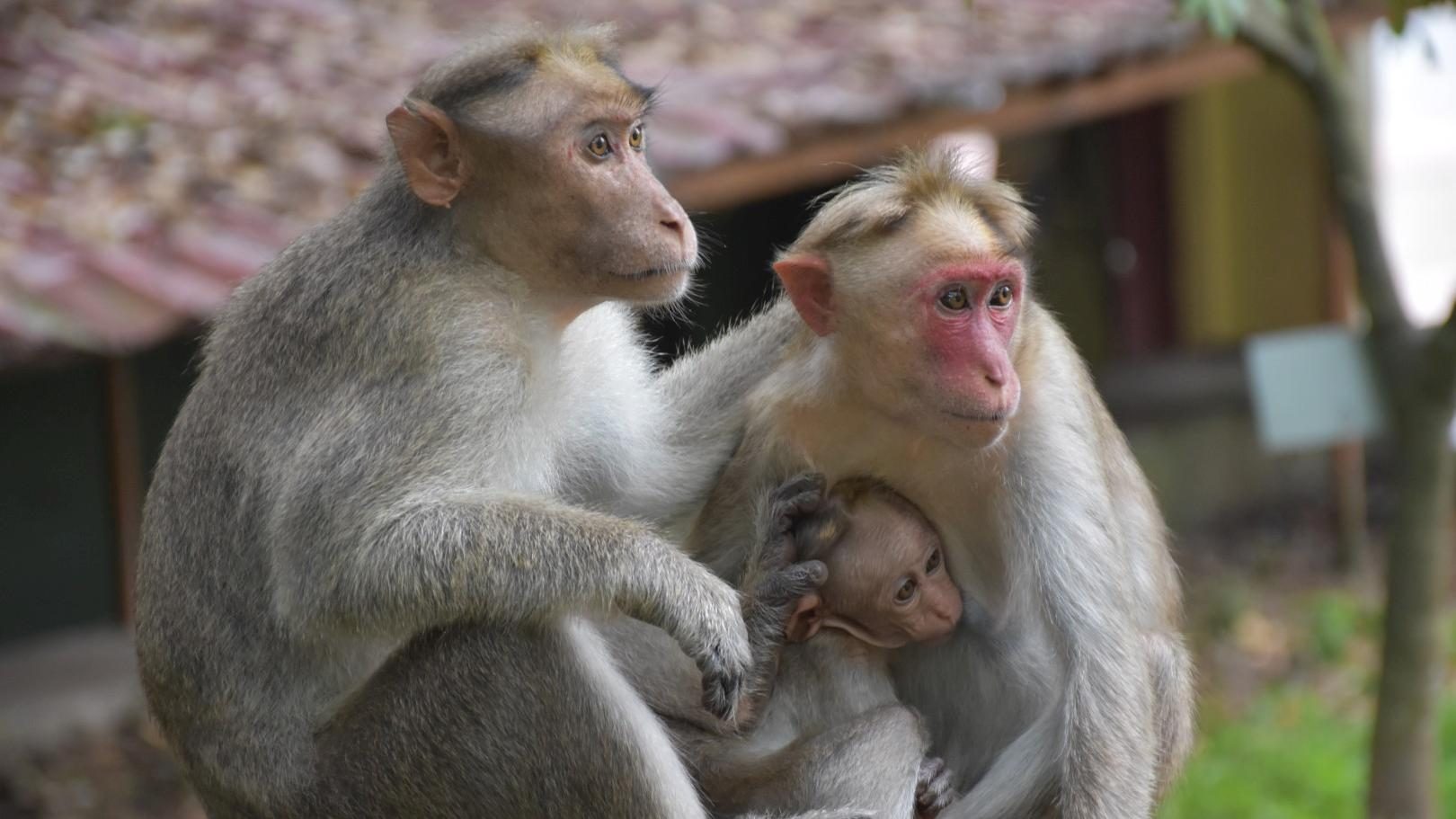
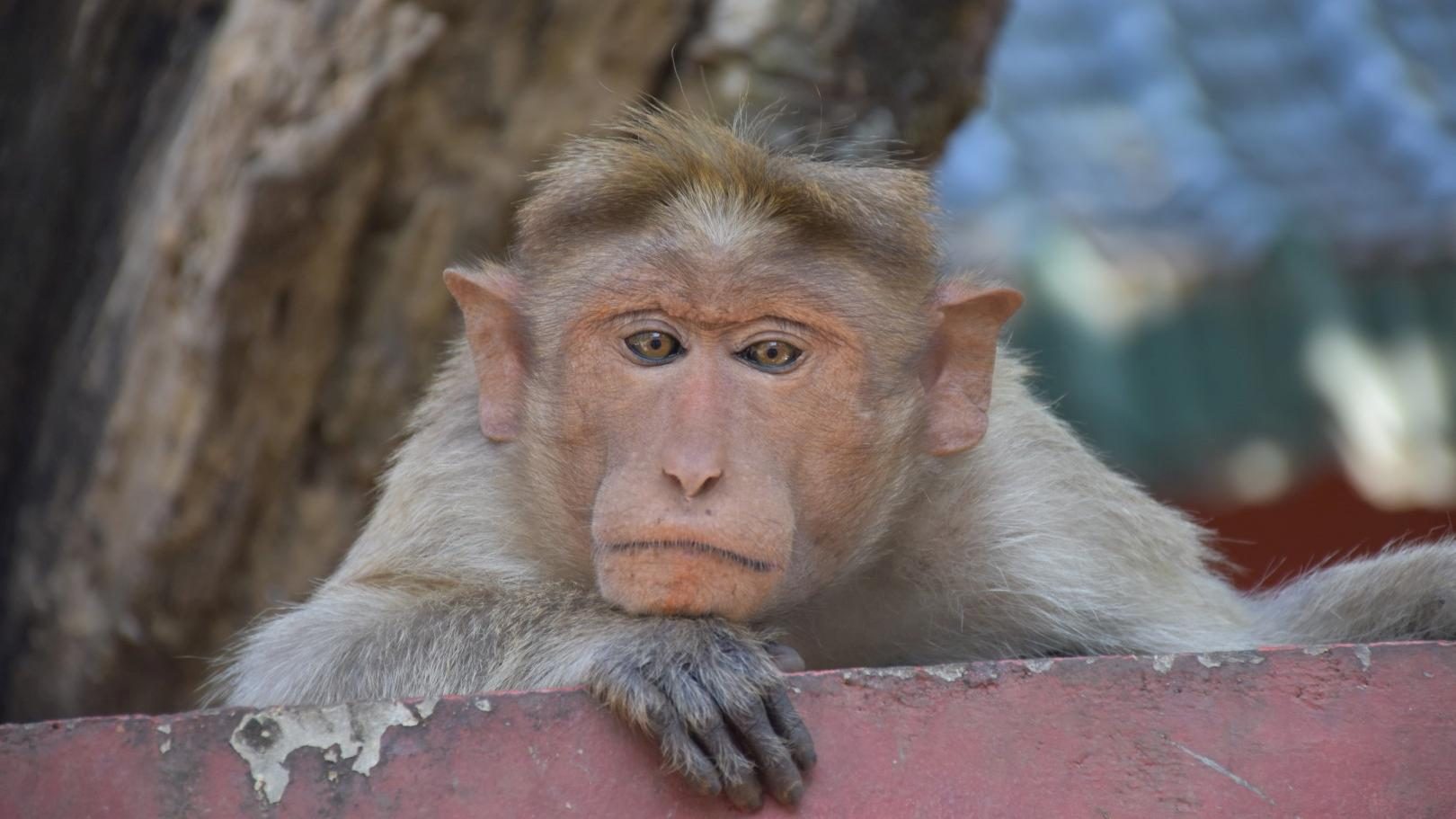
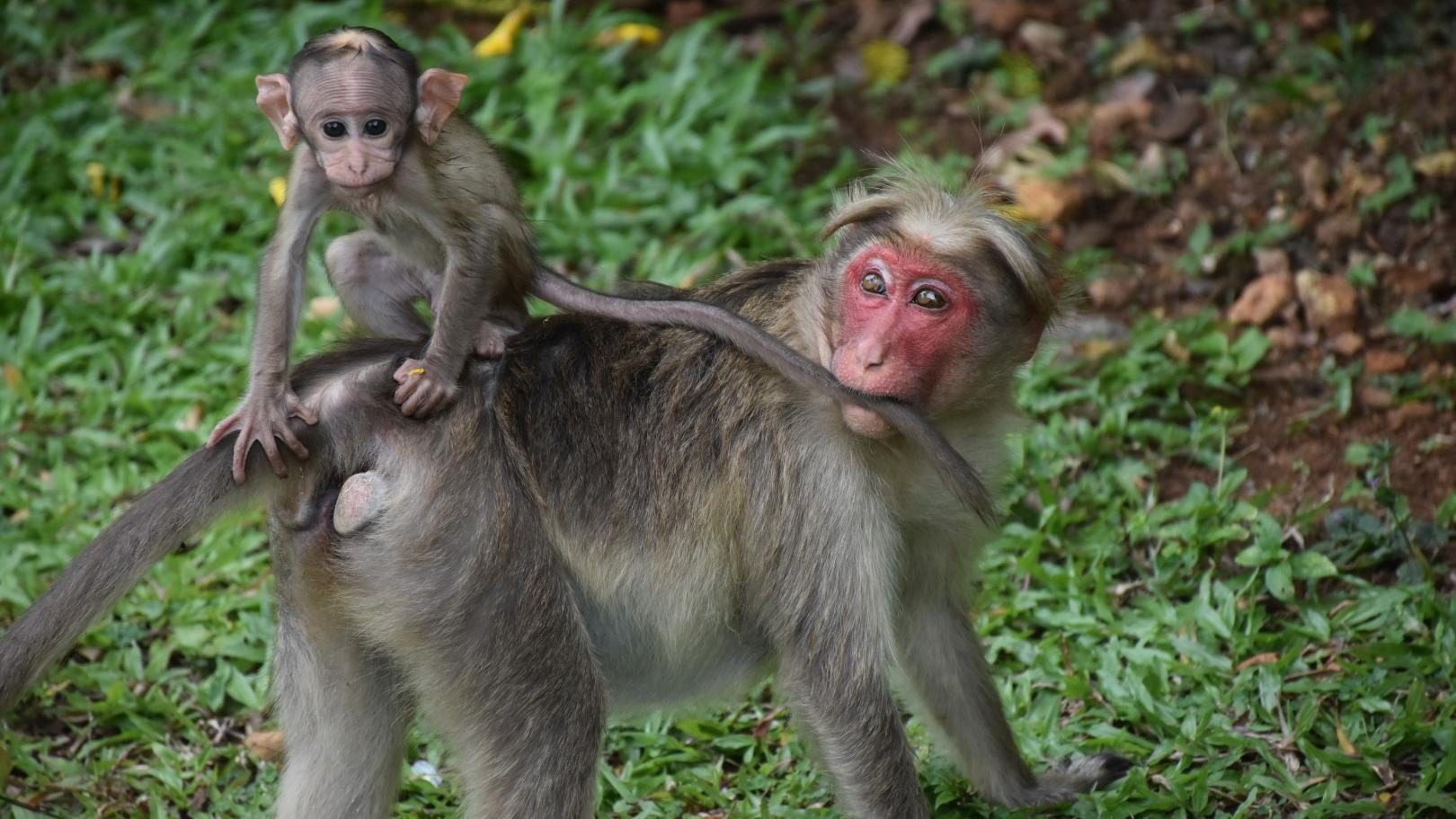
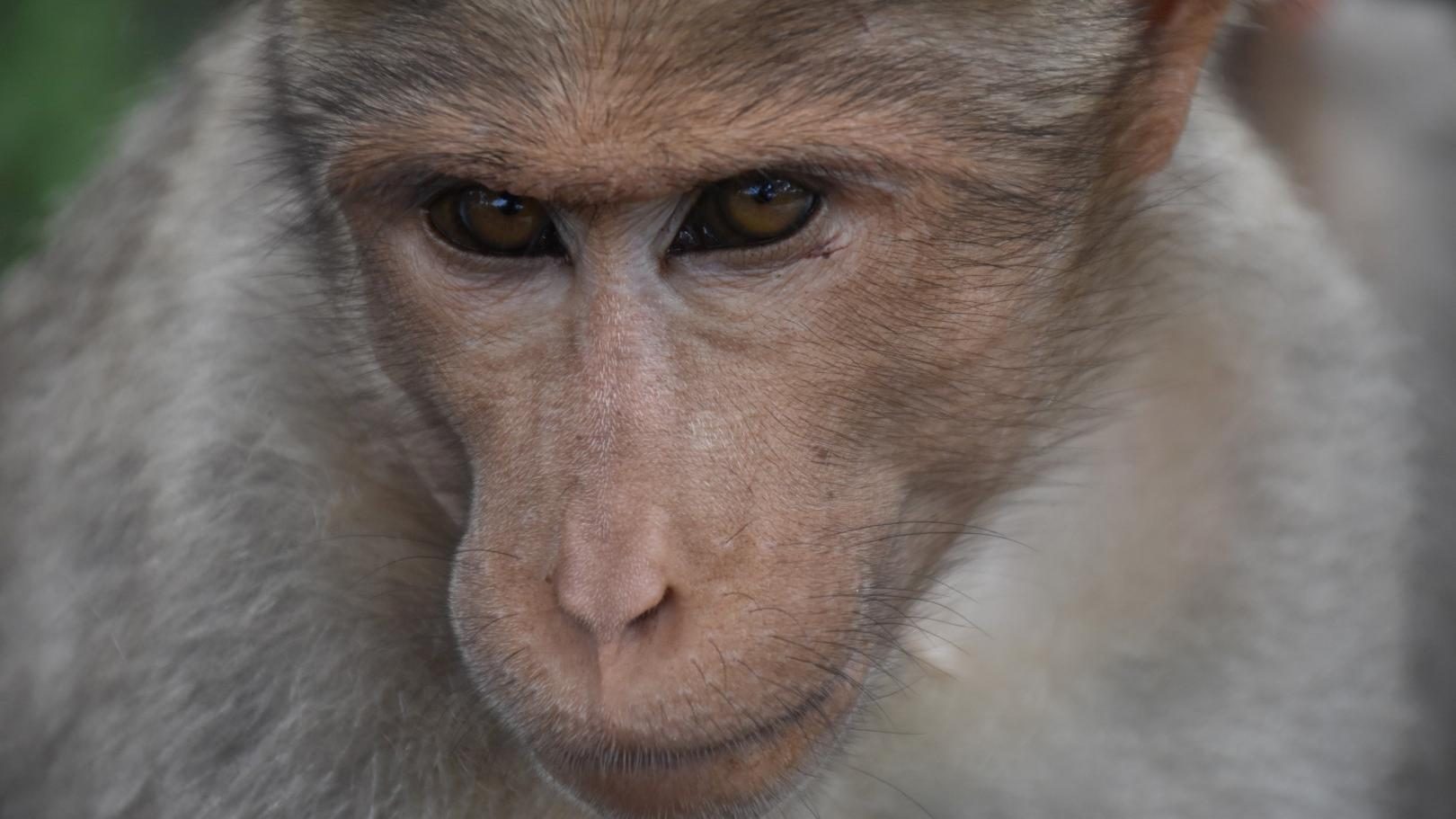
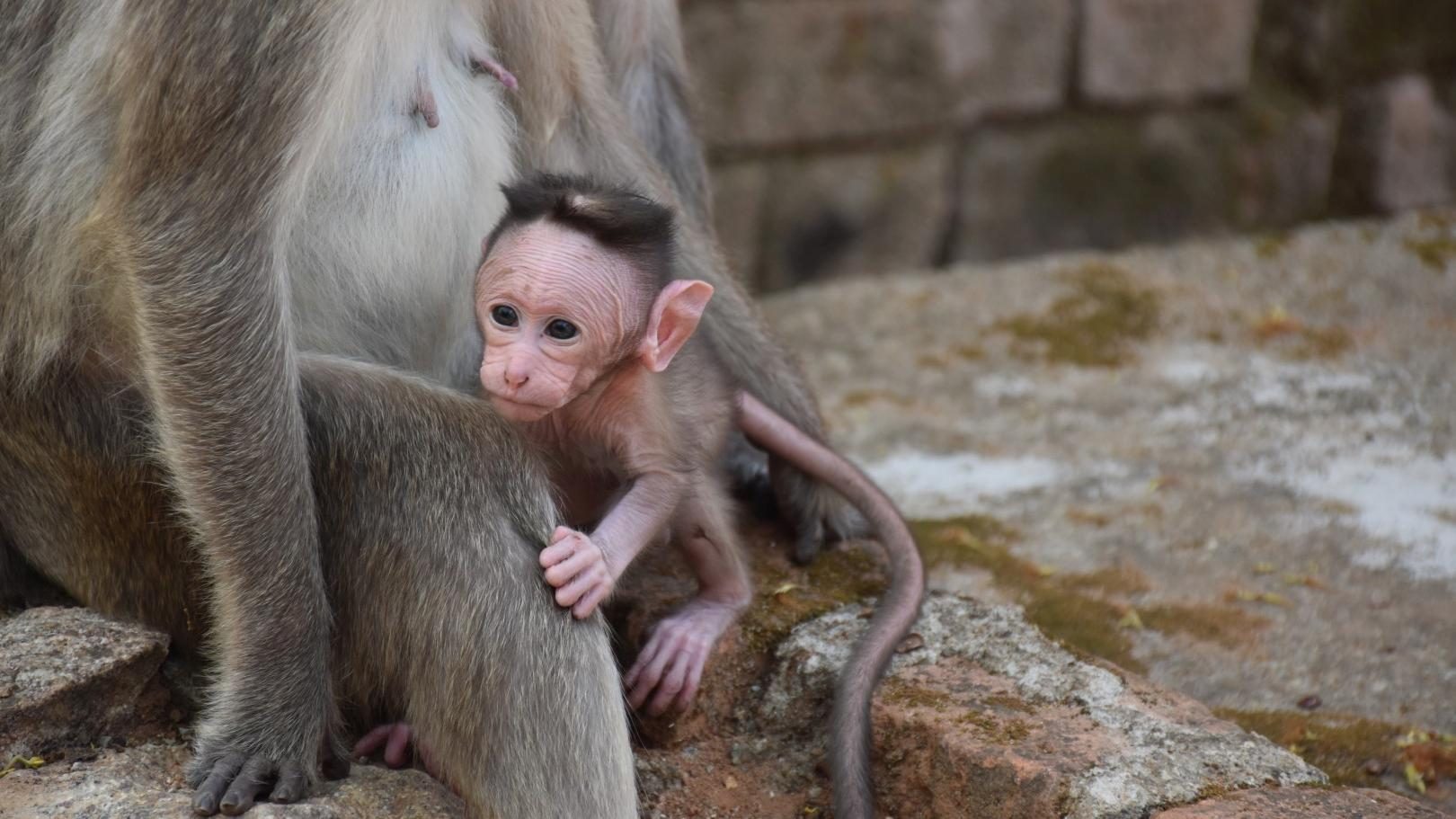
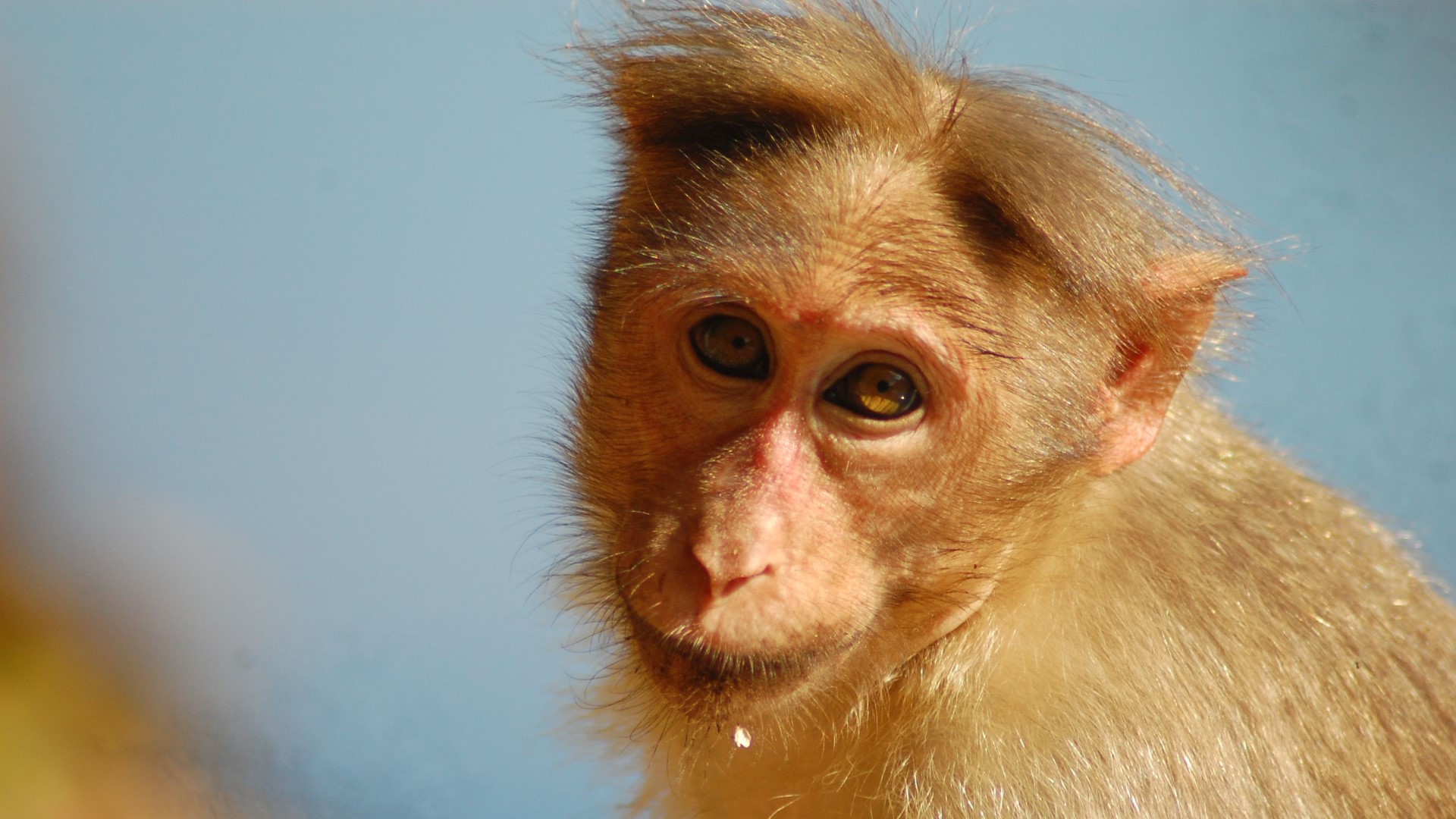
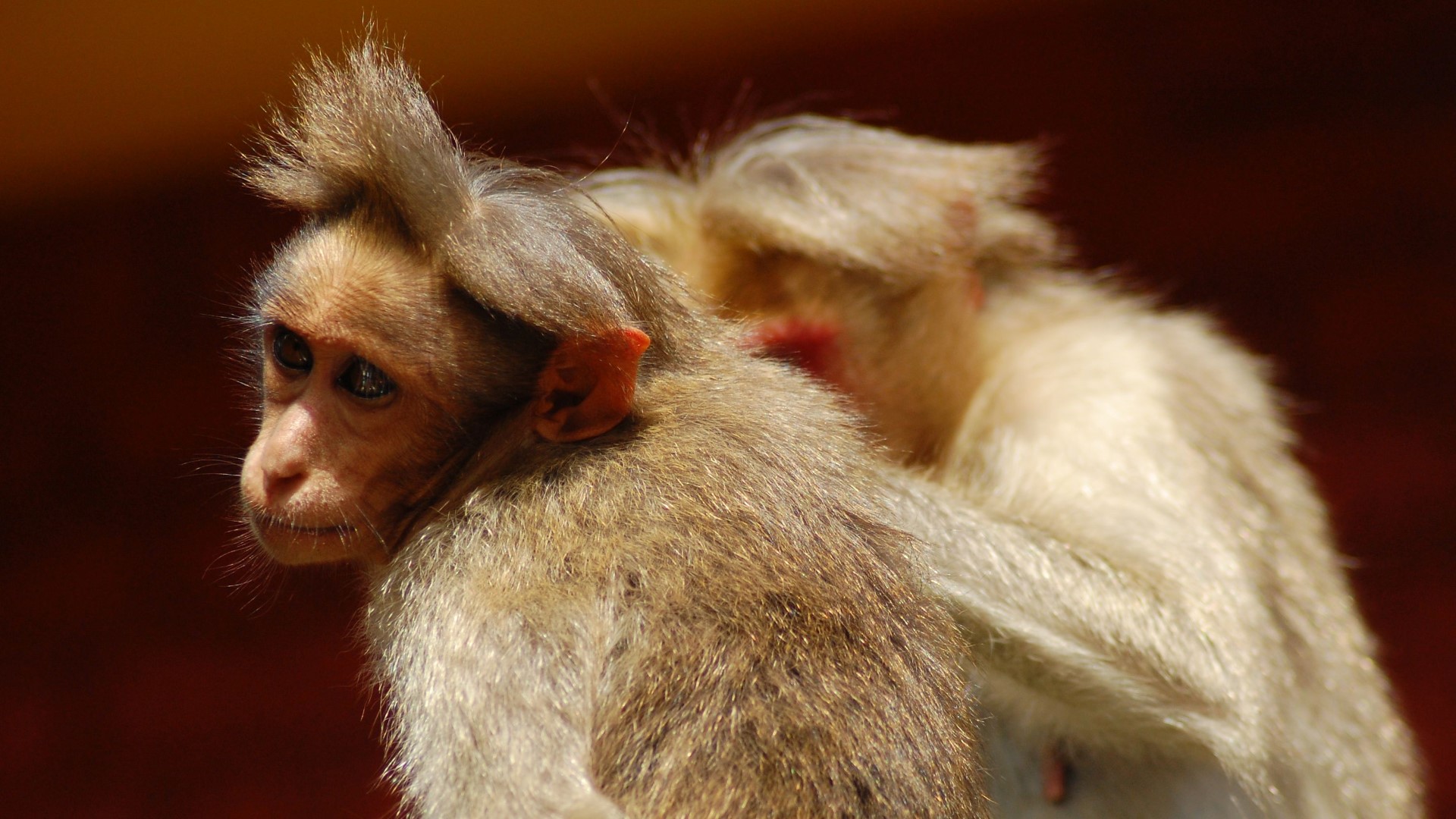
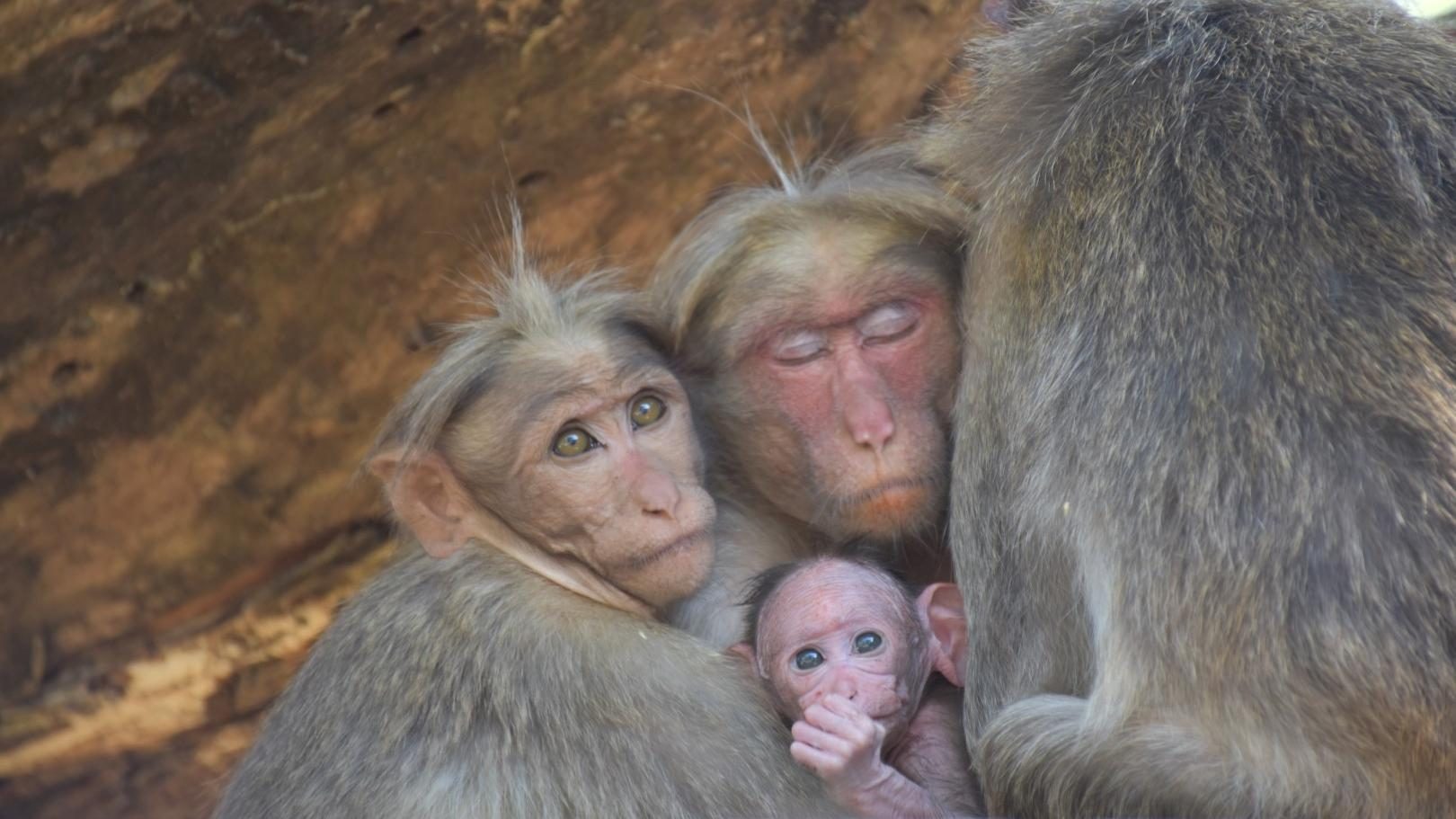
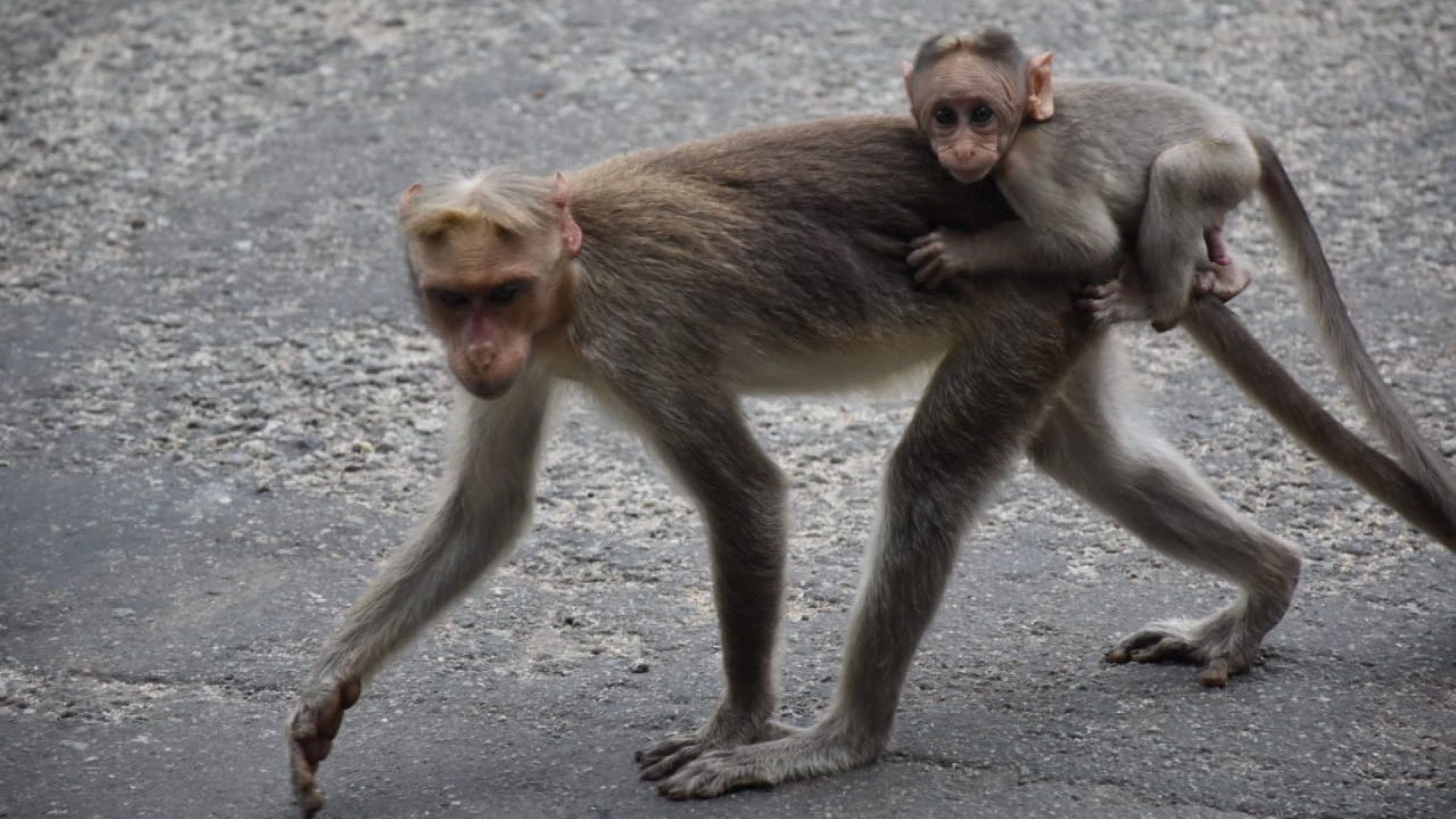
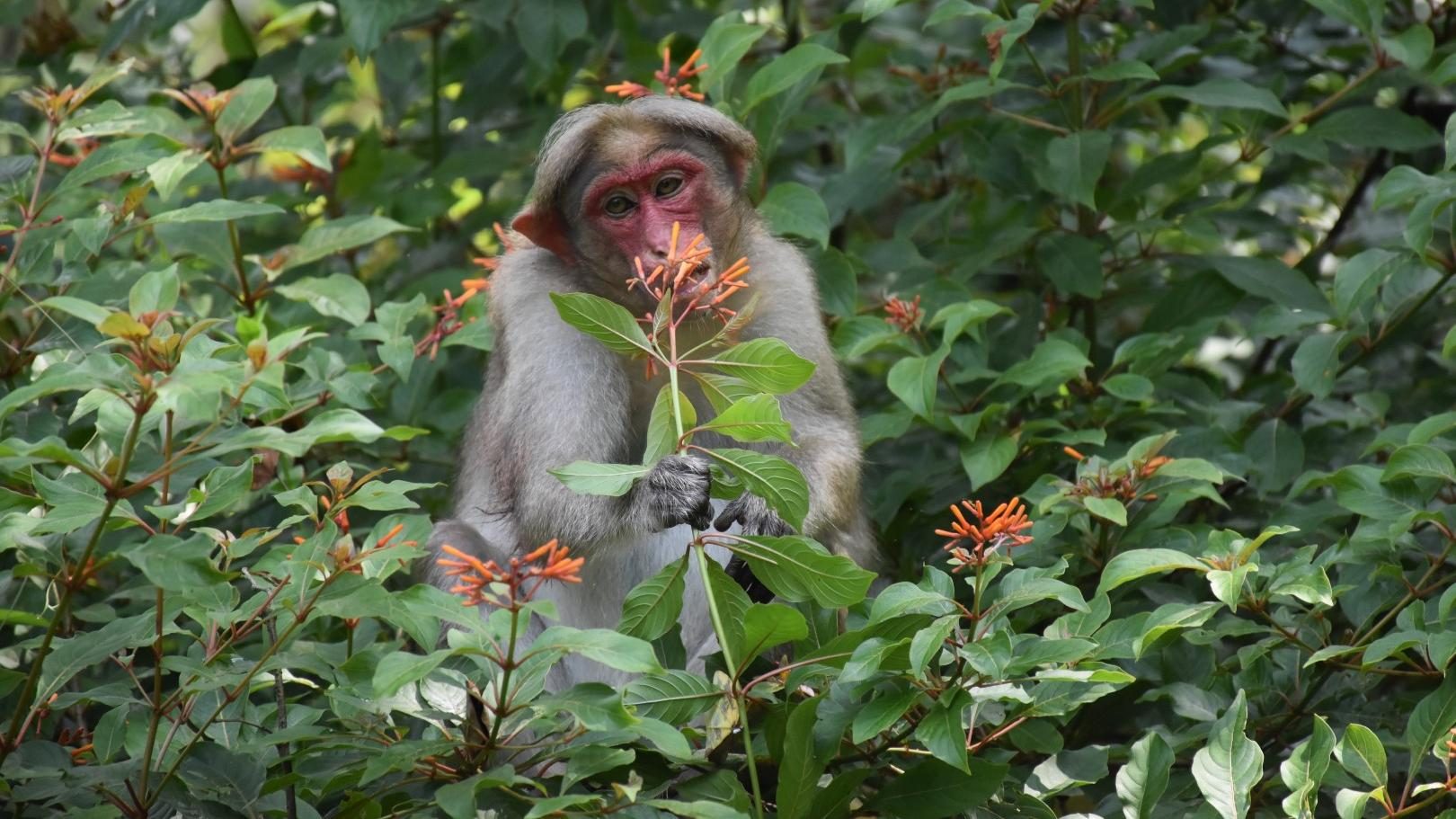
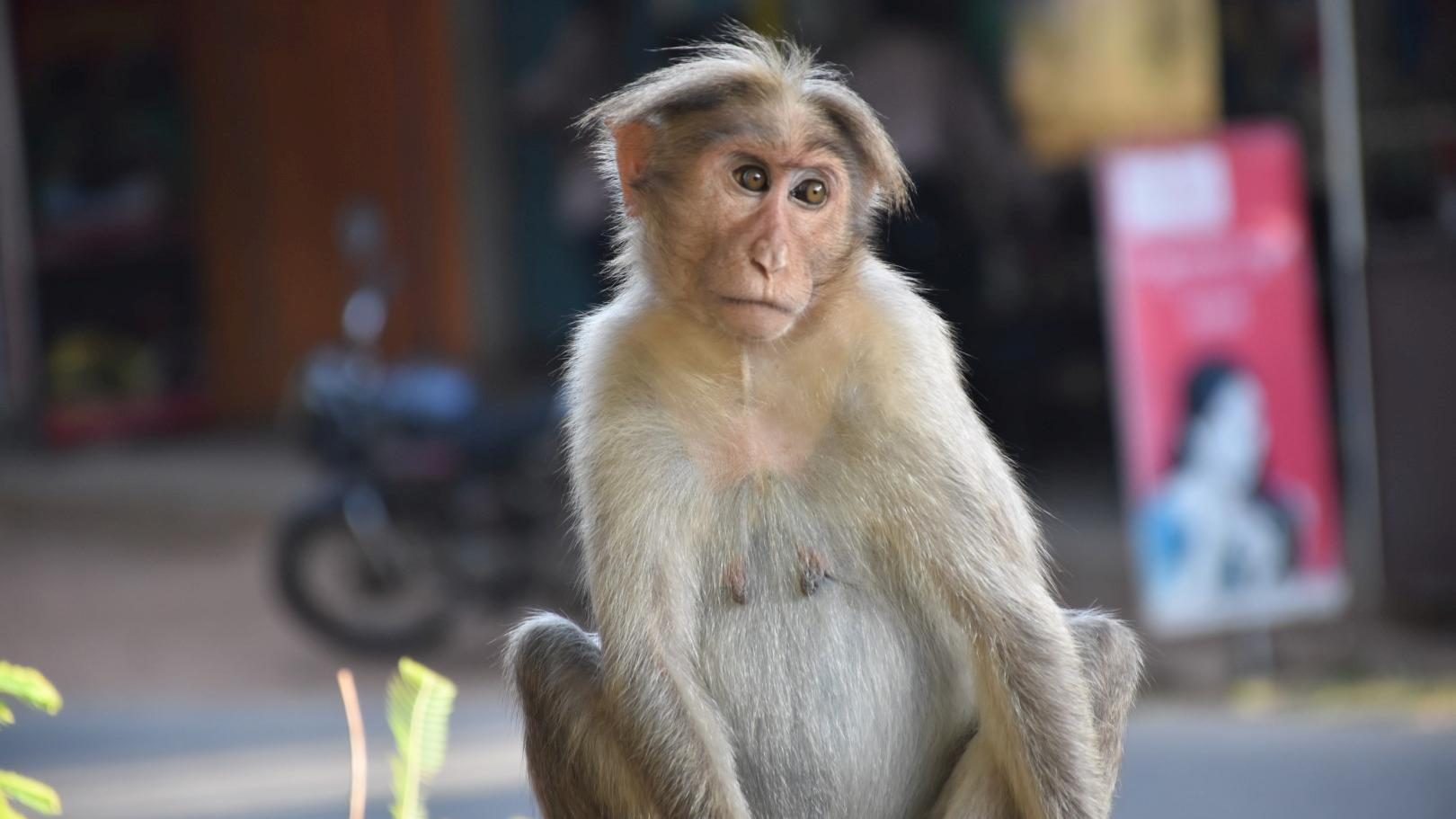
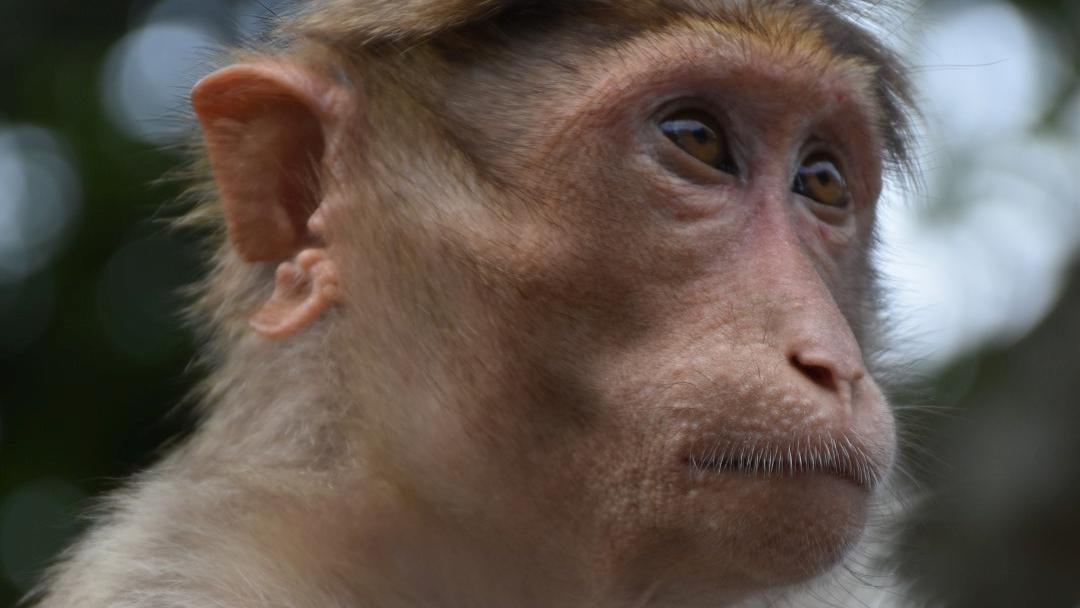
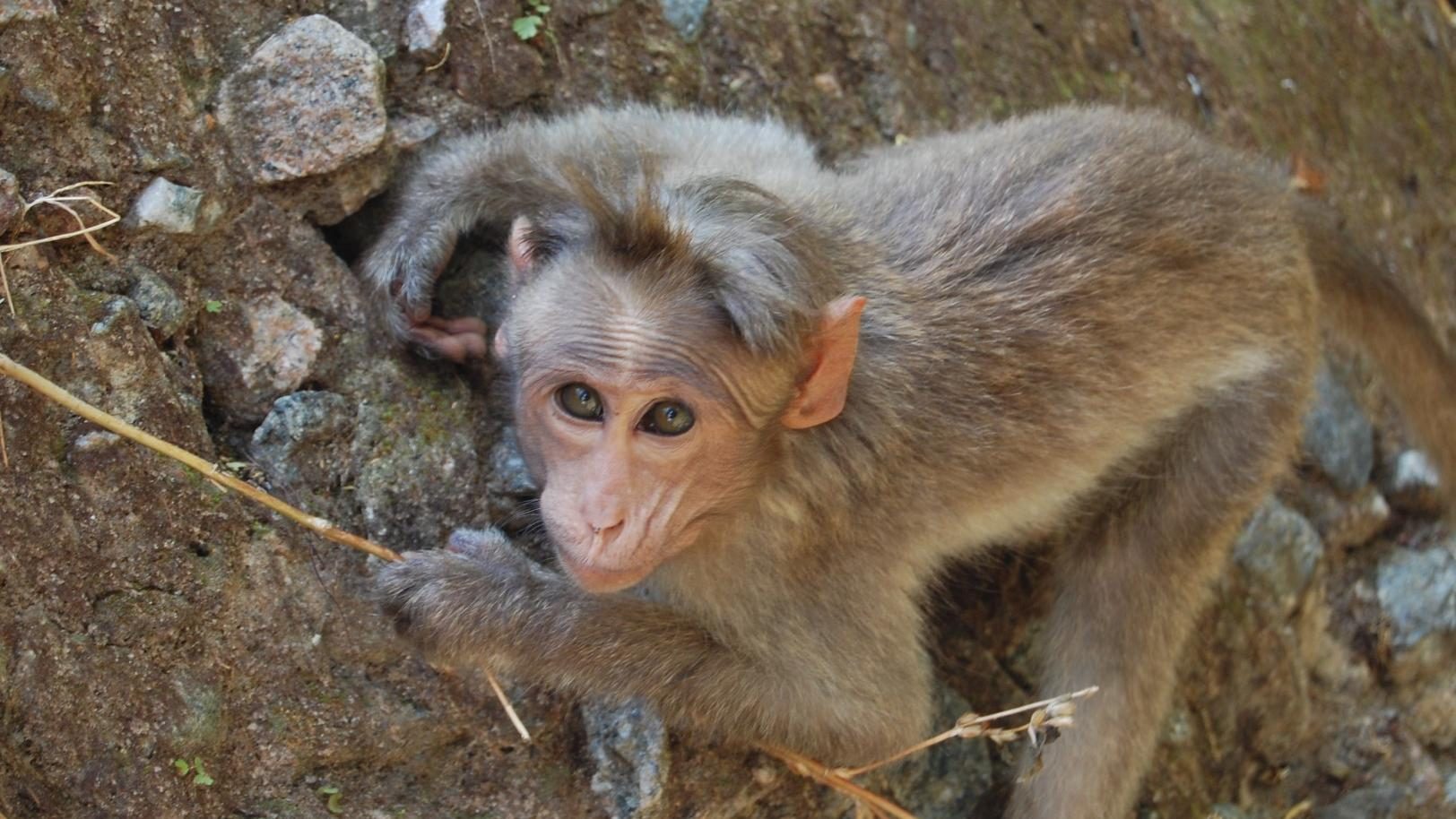
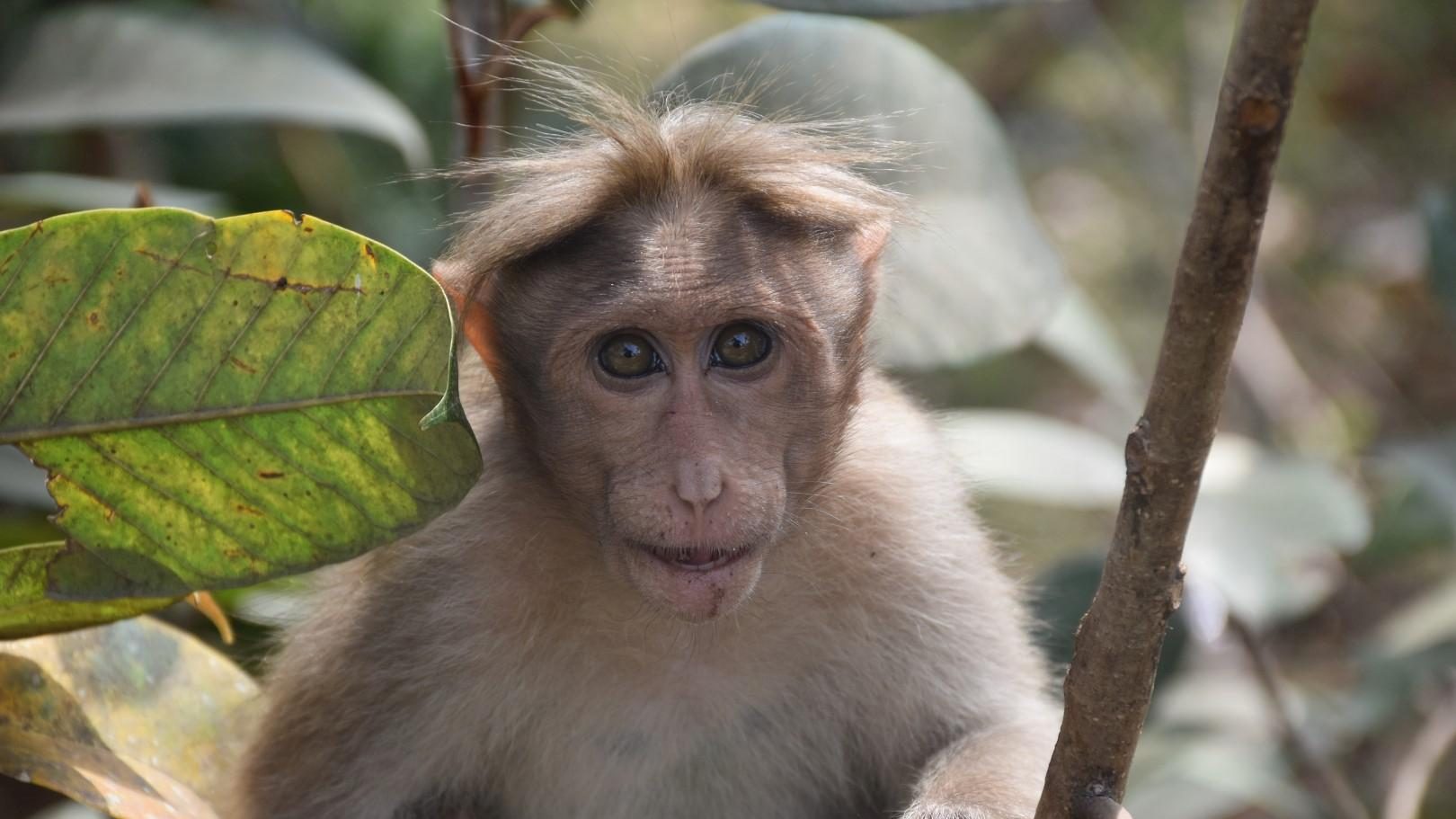
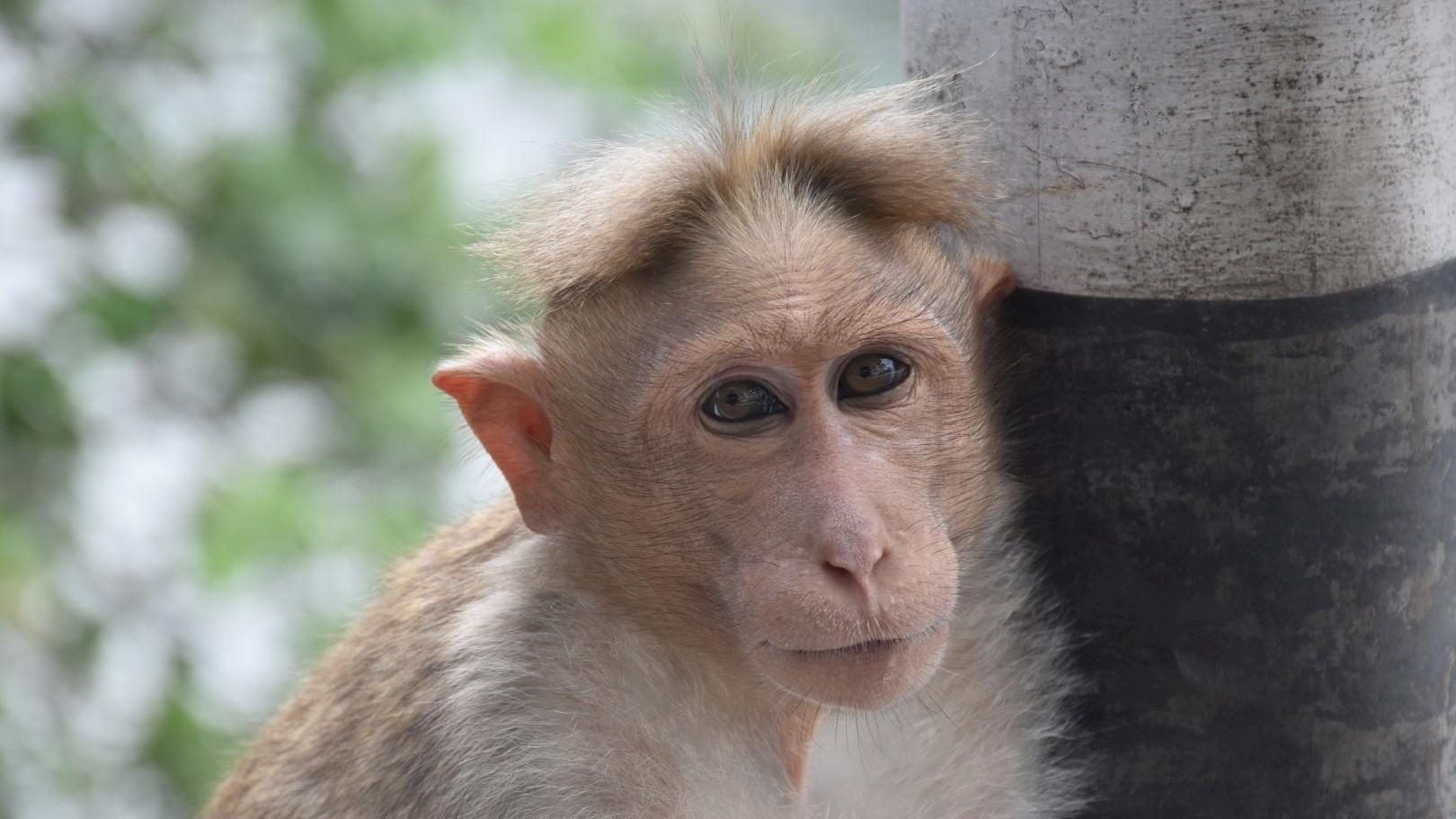
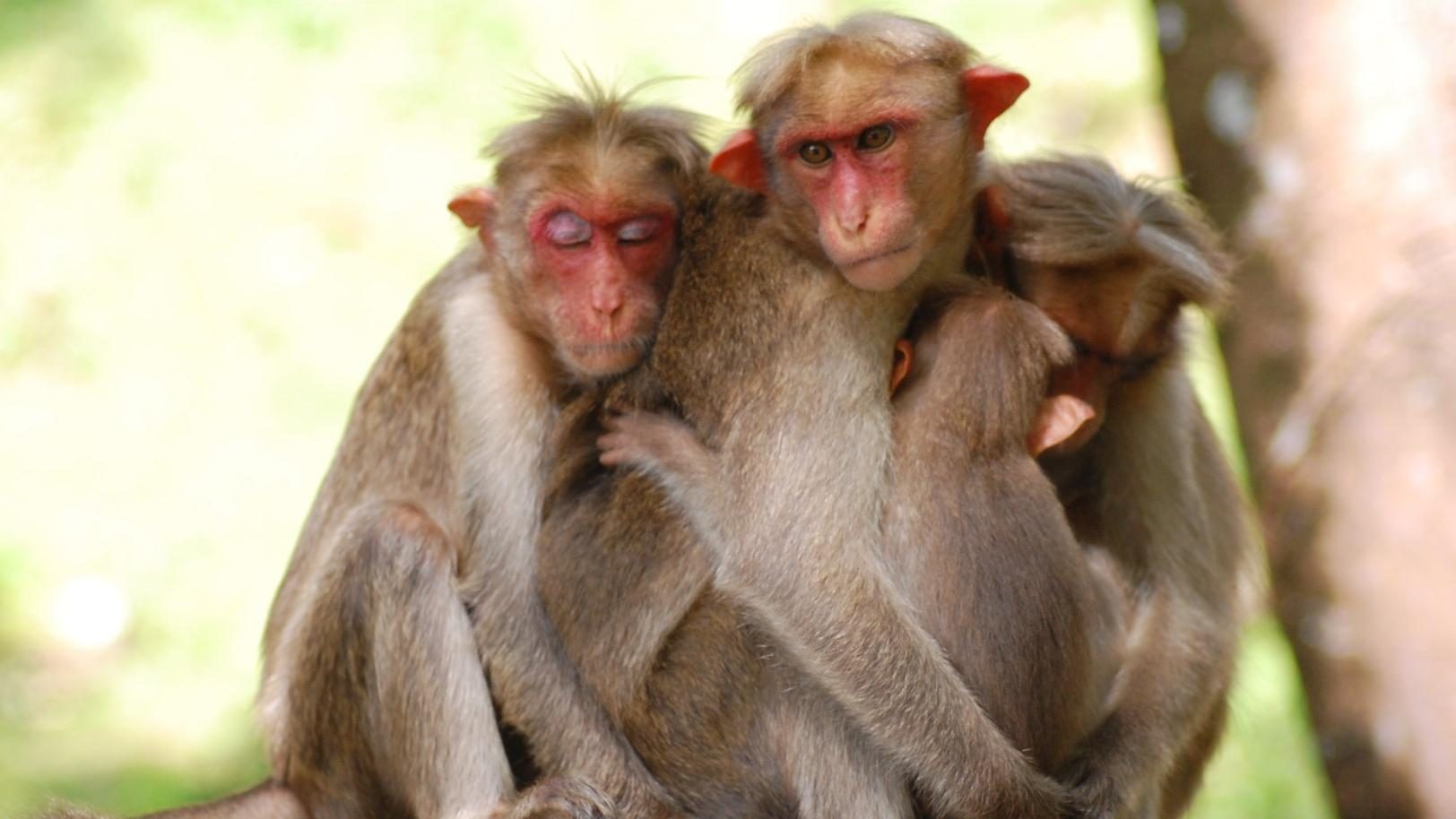

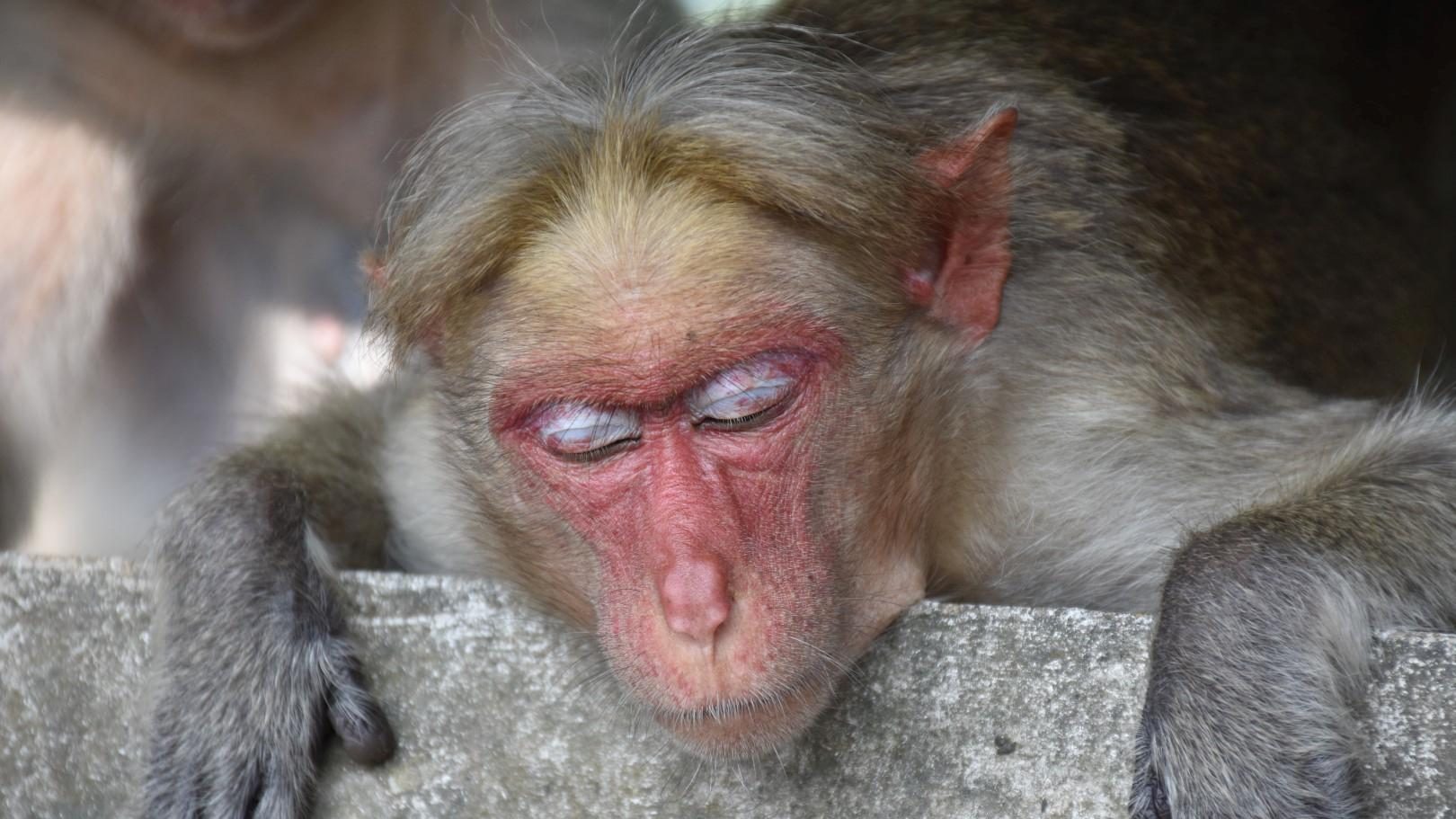
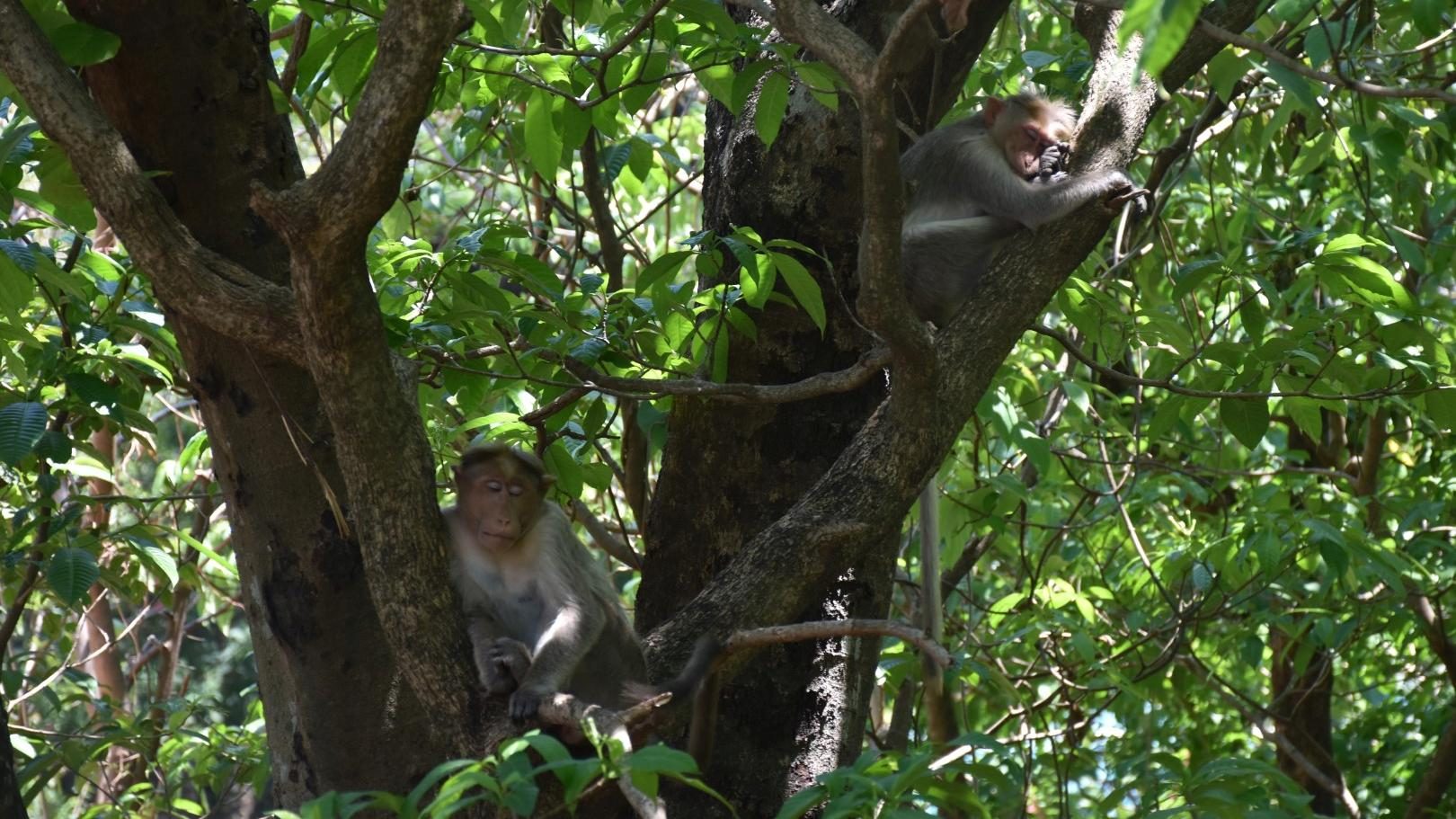
The Thenmala Macaque Project is a study of bonnet macaque (Macaca radiata) population in India. The project is based at the Institute of Human Biology and Evolution, the Adam Mickiewicz University in Poznań. Our work is carried out in collaboration with the University of Mysore (India) and University of California Davis (USA).
The aim of the Thenmala Macaque Project is to carry out research in behavioral ecology and conservation science. In addition to investigating the social dynamics and behavior of individuals, we are also interested in the effects of complex social structure and anthropogenic habitat on population dynamics and extinction.
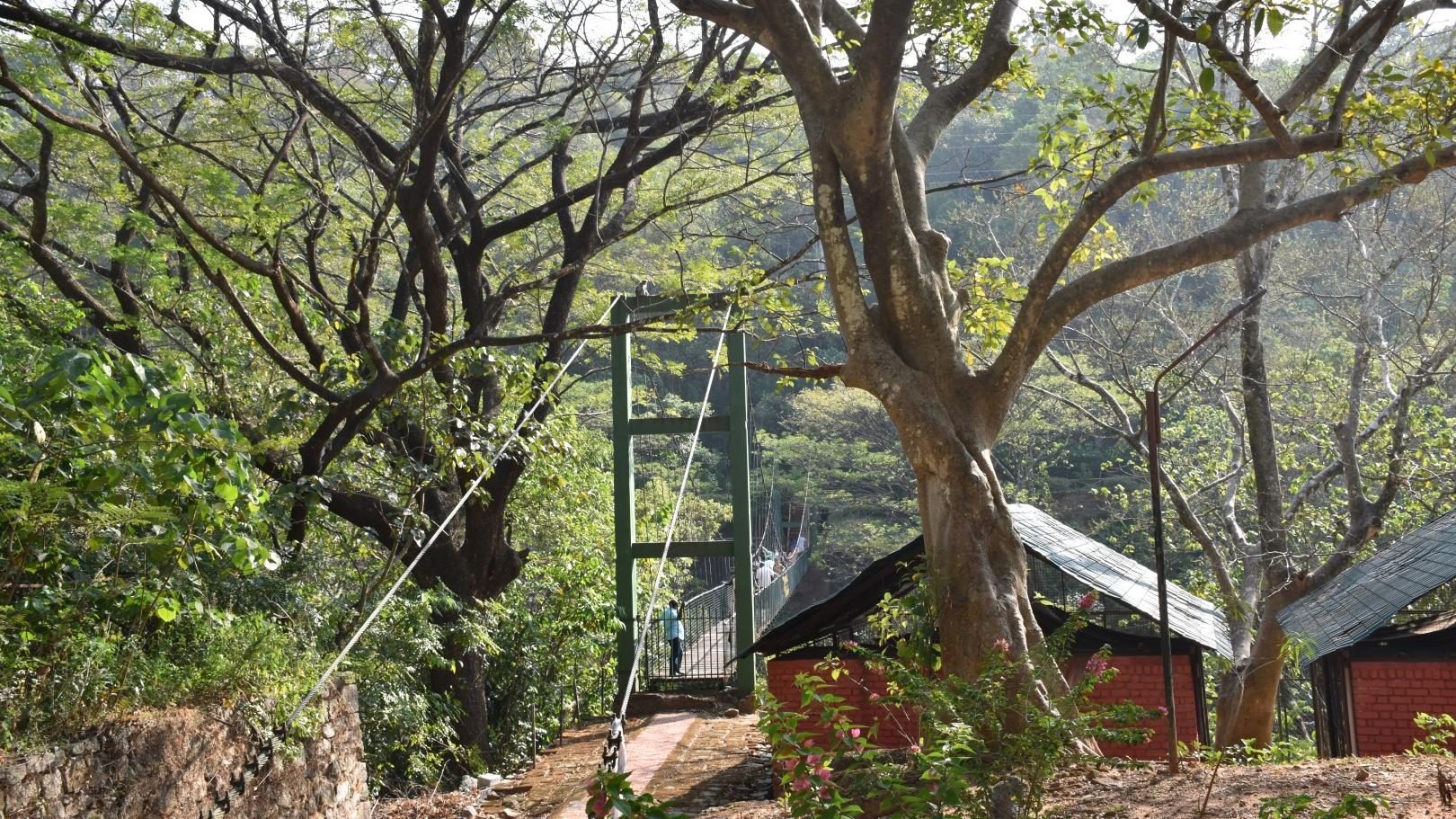
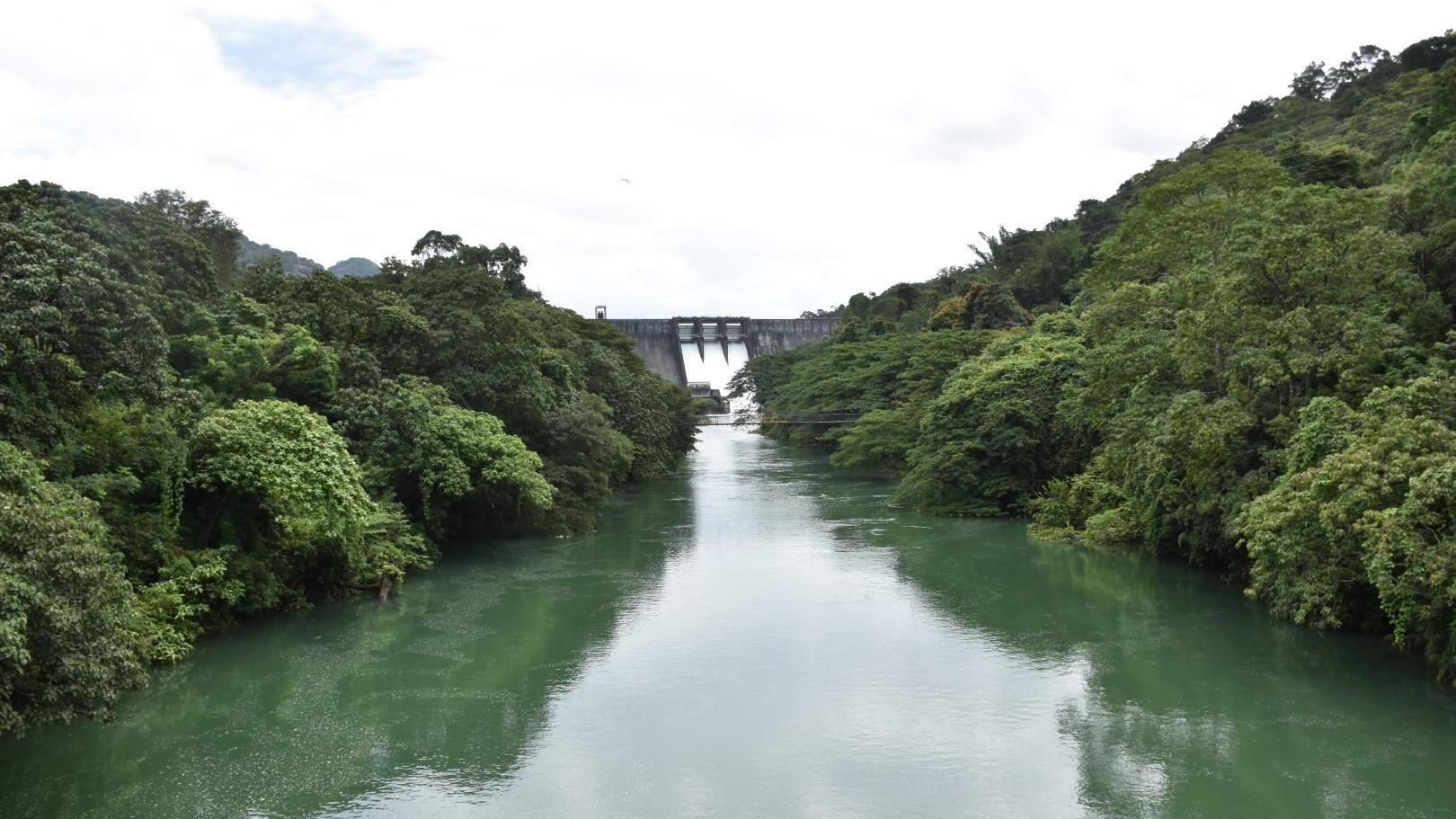
The field work is carried out in Thenmala, Kerala, a part of the Western Ghats, in southern India. The study site consists of both human settlements and forest areas.
From 2019 – 2022, we focused on maternal care and personality development, and worked with two troops comprising around 80 individually recognized macaques in total. Data collection on this aspect of the project is now complete, and we are currently in the process of publishing our results, which you can find in our News section.
Since 2022, we have shifted our focus to studying affiliative behavior and relationships between male bonnet macaques. Our main goal is to investigate how social bonds between males affect their mating success as well as their health.
From the beginning of 2025, we broadened our study to also know more about the behavior of females and infants. Now, our study also concentrates on understanding female mate choice and the factors influencing consortship formation from both male and female perspectives.
Additionally, we are also investigating the development of sociality in infant bonnet macaques and the impact of the maternal social and dominance standing on it. The focus is on understanding how infants learn to communicate and connect with the other group members during the first year of their lives and how infants from different females differ from each other.
Research permission in India is kindly provided by the National Biodiversity Authority and the Kerala Forest Department.